
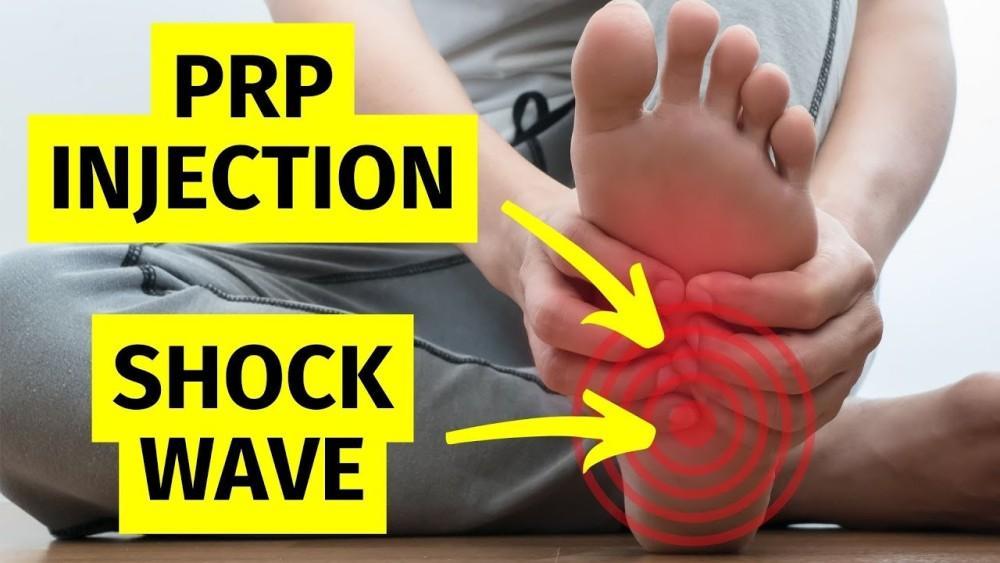
PRP vs. Shockwave Therapy: How Sports Medicine Chooses Between Regenerative Options
PRP and shockwave therapy may help selected tendon and sports injuries. Learn how sports medicine chooses between treatment options.

Shockwave therapy has become a common question for patients with chronic tendon, fascia, or overuse pain. Many people hear about it after months of plantar fasciitis, Achilles pain, tennis elbow, patellar tendon pain, or another nagging injury that has not fully improved with rest.
If you are searching for shockwave therapy in NJ, you are probably not just curious. You are likely trying to solve a problem that keeps coming back.
Shockwave therapy may be helpful for certain chronic musculoskeletal conditions, but it is not the right answer for every pain problem. The key is choosing the right patient, confirming the right diagnosis, and combining treatment with a plan that improves tissue capacity over time.
For patients in Princeton, Lawrenceville, West Windsor, Plainsboro, Hopewell, Pennington, Robbinsville, and Mercer County, shockwave therapy can be one part of a non-surgical sports medicine strategy.
Shockwave therapy uses acoustic energy to stimulate a response in irritated soft tissue.
It is often used for chronic tendon and fascia problems.
Common targets include plantar fasciitis, Achilles tendinopathy, tennis elbow, and other overuse conditions.
It is not a substitute for an accurate diagnosis.
Many patients need a series of sessions.
Shockwave therapy works best with activity modification, strengthening, and a clear return-to-activity plan.
A sports medicine evaluation can help determine whether shockwave is appropriate.
Shockwave therapy is a non-surgical treatment that applies acoustic energy to a painful area. In sports medicine, it is often used for tissue that has become chronically irritated and has not responded fully to initial care.
The goal is not simply to numb pain. The goal is to stimulate a local tissue response that may help reduce pain and improve tolerance over time.
Shockwave therapy may be considered for problems involving tendons, fascia, or other soft tissue structures. It is commonly used when symptoms have lasted long enough that rest alone is no longer solving the problem.
Shockwave therapy may be considered for several chronic overuse conditions, including:
Plantar fasciitis
Achilles tendon pain
Tennis elbow
Golfer’s elbow
Patellar tendon pain
Chronic tendon irritation
Some soft tissue overuse problems
The exact condition matters. Treatment should be directed at the correct tissue. For example, heel pain could be plantar fasciitis, but it could also be a stress fracture, nerve pain, fat pad irritation, or Achilles-related pain. Those problems require different plans.
This is why shockwave therapy should usually follow a thoughtful evaluation.
Shockwave therapy delivers mechanical energy into the target tissue. This may help stimulate a healing response, influence pain signaling, and encourage tissue remodeling over time.
For chronic tendon or fascia problems, the painful tissue may be stuck in a cycle of irritation and poor load tolerance. Shockwave therapy is intended to help change that environment.
But treatment alone is usually not enough.
If the same training error, strength deficit, mobility limitation, or repetitive load continues, symptoms may return. The best plan usually combines shockwave with progressive loading and activity guidance.
Most patients feel a tapping, pulsing, or pressure sensation over the treatment area. It may be uncomfortable, especially over a tender spot, but it should be tolerable.
The provider can usually adjust intensity based on comfort and clinical goals. Some soreness afterward may occur. Patients should receive clear instructions about activity after treatment.
Many patients require a series of sessions rather than one treatment. The number depends on the diagnosis, duration of symptoms, severity, response, and treatment plan.
Some patients notice improvement early. Others improve gradually over several weeks. Chronic tendon and fascia problems often need time because the goal is to improve tissue tolerance, not just temporarily reduce pain.
The plan should define:
How many sessions are expected initially
What symptoms may occur afterward
What activity should be modified
What exercises should continue
When to reassess progress
Before starting shockwave therapy, the most important step is confirming the diagnosis. The treatment should be directed at the tissue that is actually causing symptoms. For example, pain near the heel may be plantar fascia irritation, but it may also be Achilles-related pain, a stress injury, nerve pain, or another foot problem.
A good pre-treatment evaluation should review how long symptoms have been present, what treatments have already been tried, what activities make pain worse, and whether there are any warning signs. The provider should also consider whether the patient can modify activity during the treatment window.
Shockwave therapy is often most useful when the pain is chronic enough that the tissue needs a stronger stimulus, but not so poorly managed that the patient continues to overload it every day. In other words, the treatment and the daily plan need to work together.
Patients should also understand that soreness after treatment can happen. They should receive instructions about exercise, running, anti-inflammatory medication use, and follow-up.
The biggest mistake is treating shockwave therapy as a stand-alone cure. If the same training error, footwear issue, strength deficit, or work demand continues unchanged, symptoms may persist or return.
Another mistake is starting shockwave without a clear diagnosis. This can lead to treating the wrong tissue. A third mistake is judging the result too early. Chronic tissue problems often improve gradually, and the response may unfold over several weeks.
A better approach is to use shockwave as part of a broader plan that also includes progressive strengthening, load management, and a clear return-to-activity pathway.
Shockwave therapy may be appropriate when:
Pain has persisted despite reasonable initial care
Symptoms are consistent with a tendon or fascia problem
The patient wants a non-surgical option
The diagnosis has been evaluated
There is no urgent red flag condition
The patient is willing to follow rehab and load-management guidance
It may be especially helpful for active adults who are stuck in a cycle of rest, return, and flare.
Shockwave therapy may not be appropriate as the first step if there is concern for:
Fracture or stress fracture
Infection
Significant swelling or acute injury
Severe unexplained pain
Neurologic symptoms
Pain from a different source than the treatment target
It also may not be the best choice if the patient is not ready to modify the activity pattern that keeps irritating the tissue.
This is important.
Shockwave therapy can be helpful, but it should not replace the fundamentals of recovery. Most chronic overuse problems improve best when care includes:
Accurate diagnosis
Load management
Strength training
Mobility work when appropriate
Return-to-activity progression
Footwear or equipment review when relevant
Running or movement analysis when symptoms recur
The treatment can be part of the spark, but the long-term change usually comes from rebuilding capacity.
At Princeton Sports and Family Medicine, shockwave therapy is integrated into sports medicine care rather than treated as a one-size-fits-all service.
Sports Medicine Services can help determine whether your pain is likely coming from a tendon, fascia, joint, nerve, bone, or another structure.
Shockwave Therapy may be recommended when the diagnosis and clinical picture fit.
Physical Therapy can help build strength, mobility, and load tolerance during and after treatment.
For runners with recurring lower-extremity symptoms, the Run Stride & Performance Evaluation may help identify movement or training patterns that contribute to overload.
PSFM Wellness and Fuse Sports Performance can support longer-term exercise consistency, strength development, and performance goals.
Before a shockwave visit, it helps to think through your symptom history. When did the pain start? What activities make it worse? What have you already tried? Does pain improve with rest and return with activity? Does it hurt during exercise, afterward, or the next morning?
Bring or be ready to discuss your current training routine, footwear, work demands, and prior imaging if you have had any. These details help determine whether the painful area is appropriate for shockwave therapy or whether another diagnosis should be considered first.
Patients should also ask what to do between treatments. The answer should be specific. Some people need to reduce running, jumping, or heavy loading temporarily. Others may continue modified activity. Exercises may be added or adjusted based on the diagnosis.
The best shockwave plan should make the next steps clear: what treatment is targeting, how progress will be measured, what activities are safe, and when to reassess if improvement is not occurring.
Shockwave therapy is often used for chronic tendon and fascia problems such as plantar fasciitis, Achilles tendon pain, and tennis elbow. It should be used after a diagnosis is confirmed.
It can be uncomfortable, but it should be tolerable. The intensity can often be adjusted during treatment.
Many patients receive a series of treatments. The exact number depends on the condition, duration, severity, and response.
No. Shockwave is a treatment tool. Physical therapy is a broader process that addresses strength, mobility, function, and return to activity.
It may help some cases of chronic plantar fasciitis, especially when paired with strengthening and load management.
Princeton Sports and Family Medicine offers shockwave therapy in Lawrenceville for appropriate sports medicine and overuse conditions.
Shockwave therapy may be a helpful option for chronic tendon or fascia pain, but it works best when it is part of a complete plan. Diagnosis comes first. Then treatment, rehab, load management, and return-to-activity progression can work together.
If chronic pain is limiting walking, running, lifting, or daily activity, request an appointment with Princeton Sports and Family Medicine.
This content is educational only and is not a substitute for individualized medical advice. If you have severe pain, rapidly worsening symptoms, chest pain, fainting, new weakness, loss of bowel or bladder control, fever, major trauma, inability to bear weight, significant swelling, or other concerning symptoms, seek urgent medical evaluation.


