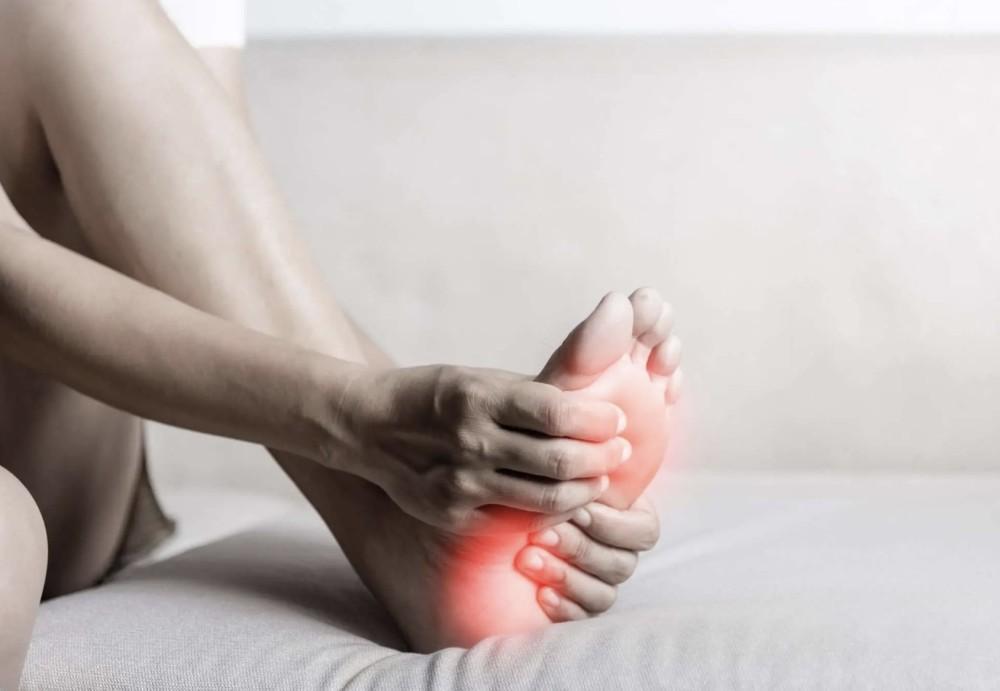
Nighttime Foot/ Leg Cramps: Causes, Deficiencies, Medications, Nerve Issues, and What Actually Helps
Nighttime foot and leg cramps are common, but magnesium or dehydration are not always the cause. Learn what helps and when cramps need evaluation.

Pain changes movement- often immediately and often unconsciously. When walking becomes painful, most people adopt an antalgic gait, commonly referred to as limping.
Understanding how limping alters mechanics and how to safely restore symmetry can be the difference between short-term relief and long-term injury.
An antalgic gait is a walking pattern adopted to minimize pain. The classic features include:
Shortened stance time on the painful leg
Reduced weight bearing through the injured side
Faster step-off from the painful limb
Longer stance time on the “good” leg
The goal is simple: spend less time loading what hurts. Unfortunately, the body pays a price elsewhere.
Walking is designed to be rhythmical and symmetrical. Limping disrupts this balance:
One leg absorbs more force
One hip works harder to stabilize
One side of the spine experiences more repetitive load
Even mild asymmetry, repeated thousands of times per day, compounds stress.
The uninjured limb often takes on:
Higher impact forces
Longer stance duration
Greater muscular demand
This is why patients frequently develop:
Knee pain on the opposite side
Hip or SI joint discomfort
Achilles or foot pain in the “good” leg
The original injury becomes a two-sided problem.
Limping is inefficient. Compared to symmetrical walking:
Oxygen consumption increases
Muscular effort rises
Fatigue sets in earlier
As fatigue increases, mechanics worsen further- creating a feedback loop of poor movement and rising discomfort.
To avoid pain, many people:
Lean the trunk toward or away from the painful side
Hike the hip to clear the foot
Reduce arm swing
These changes increase stress on:
The lumbar spine
Hip flexors
Paraspinal muscles
Low back pain often follows prolonged limping.
One of the most important- and overlooked- issues is that limping can outlast the original injury.
Reasons include:
Learned motor patterns
Fear of reloading the painful limb
Persistent weakness or stiffness
Subtle pain that no longer feels “sharp” but still alters movement
At this stage, pain may be gone- but abnormal loading remains.
Patellofemoral pain
Hip bursitis or tendinopathy
IT band symptoms
Low back pain
Stress injuries in the non-painful limb
Treating these secondary issues without addressing gait asymmetry often leads to frustration and recurrence.
Before correcting gait, the painful side must tolerate load:
Reduce speed
Shorten walking bouts
Use assistive support temporarily if needed
Symmetry cannot be forced- it must be earned safely.
Walking faster often hides asymmetry. Slowing down allows:
Better control
Improved foot placement
More even stance time
Speed can be reintroduced later.
A simple but powerful cue:
“Make your steps the same length.”
Avoid:
Short, quick steps on the painful side
Overstriding with the opposite leg
Slightly increasing step rate:
Reduces overloading
Improves rhythm
Limits excessive time on one limb
This often restores symmetry without conscious effort.
Weight-Shift Drill
Stand evenly on both feet
Slowly shift weight side to side
Emphasize smooth control on the painful side
Marching in Place
Promotes equal loading
Reinforces upright posture
Improves confidence through the painful limb
Short Walk Intervals
Walk for 1–2 minutes focusing on symmetry
Rest, then repeat
Quality matters more than distance
Seek evaluation if:
Limping persists beyond 7–10 days
Pain worsens despite rest
You develop new pain elsewhere
You cannot fully weight bear without compensation
Persistent limping is not benign- it’s a sign that something still needs attention.
Limping is the body’s attempt to protect itself- but protection can become a problem when it alters joint loads, increases energy cost, and creates secondary injuries. From a sports medicine standpoint, restoring symmetrical walking is often as important as treating the original source of pain.
Walking should distribute load, not concentrate it. When symmetry returns, efficiency improves, pain often fades, and the cycle finally breaks.
At Fuse Sports Performance and Princeton Sports and Family Medicine, P.C., our professionals specialize in sports medicine services, including gait specific evaluations and training to assess your risk for injury and assist in your performance goals.