

PRP vs. Shockwave Therapy: How Sports Medicine Chooses Between Regenerative Options
PRP and shockwave therapy may help selected tendon and sports injuries. Learn how sports medicine chooses between treatment options.
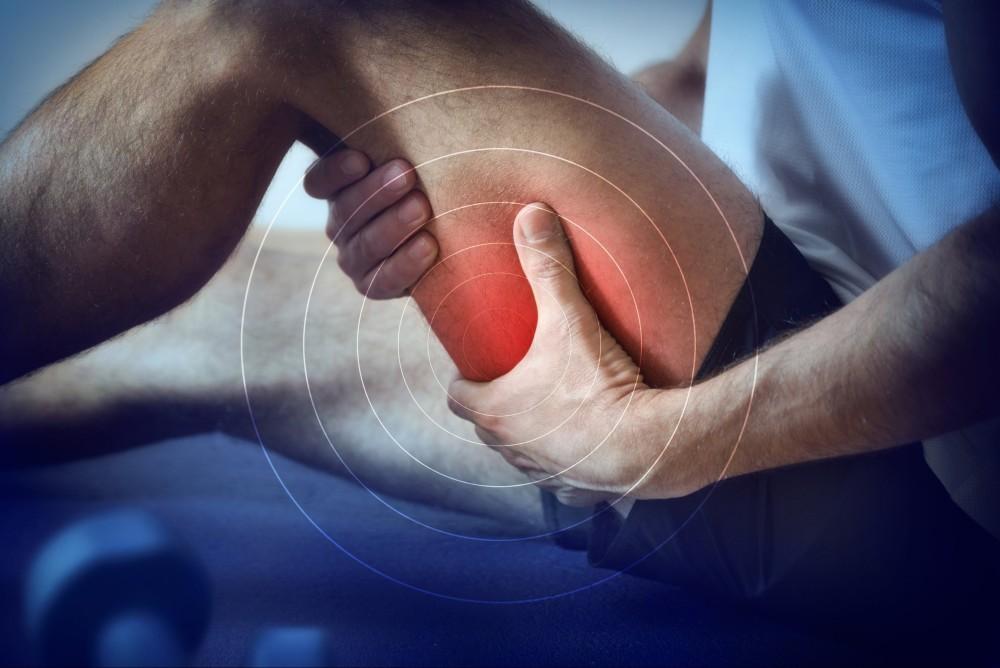
A hamstring strain has a frustrating personality.
It may hurt badly on day one and feel dramatically better within a week. Walking becomes comfortable. Stairs feel normal. You can jog a little. The athlete starts thinking, “I’m basically healed.”
Then they sprint.
The hamstring tightens, grabs, or tears again.
That gap between feeling better and actually being ready for high-speed sport is one of the central challenges of hamstring strain recovery.
Hamstring injuries are especially common in running, sprinting, soccer, football, lacrosse, baseball, basketball, track, dance, and other sports that require acceleration, high-speed running, kicking, jumping, or rapid lengthening of the back of the thigh.
Most hamstring strains heal without surgery. But successful recovery requires more than waiting for pain to disappear. The hamstring eventually needs to tolerate high force, high speed, long muscle lengths, fatigue, and the unpredictable demands of sport.
For athletes in Princeton, Lawrenceville, West Windsor, Plainsboro, Hopewell, Pennington, Robbinsville, and throughout Mercer County, this guide explains the entire process: how hamstring strains are classified, when imaging is useful, what rehab should accomplish, how to return to running and sprinting, and what should happen before full return to sport.
Hamstring strain recovery should be criteria-based, not just time-based.
A Grade 1 strain may recover relatively quickly, while larger tears, proximal injuries, or tendon involvement can take substantially longer.
Feeling good while walking or jogging does not mean the hamstring is ready to sprint.
Aggressive stretching early after injury can irritate healing tissue.
Progressive strengthening should include both knee-flexion and hip-extension patterns.
Later rehab should restore hamstring strength at longer muscle lengths and under eccentric load.
Running must progress from easy submaximal work toward high-speed sprinting.
Athletes in sprinting sports should tolerate near-full or full-speed running before unrestricted competition.
Return-to-sport decisions should also consider strength, tenderness, confidence, fatigue resistance, and sport-specific demands.
Significant bruising, major weakness, pain near the sit bone, inability to walk normally, or a sudden pop deserves earlier evaluation.
The hamstrings are three major muscles along the back of the thigh:
Biceps femoris
Semitendinosus
Semimembranosus
Together, they help extend the hip and bend the knee. More importantly for athletes, they help control the leg at high speed.
During sprinting, the hamstrings experience substantial force as they help slow the lower leg and prepare the foot for ground contact. During acceleration, jumping, kicking, and cutting, they also contribute to producing force.
A hamstring strain occurs when muscle or muscle-tendon tissue is loaded beyond its current capacity.
The injury may range from microscopic muscle-fiber damage to a major tear or tendon avulsion.
Where and how the injury occurs matters.
A classic sprinting injury often develops during high-speed running or acceleration.
Another pattern occurs when the hamstring is suddenly lengthened under load, such as during:
Kicking
Dancing
Splits
Slipping
Hurdling
Water skiing
Extreme hip flexion with the knee relatively straight
These injuries may involve different portions of the hamstring and can have different recovery timelines.
That is one reason a generic statement such as “a hamstring takes three weeks to heal” is not very useful.
Hamstring strains are commonly divided into three grades.
A mild strain generally causes:
Localized soreness or tightness
Minimal or no bruising
Little strength loss
Normal or nearly normal walking
Pain mainly with faster running or longer stride length
Some athletes return relatively quickly, but sprint athletes still need to rebuild high-speed tolerance.
A moderate strain may cause:
Clear pain at the time of injury
Limping
Weakness
Bruising or swelling
Pain with resisted knee flexion or hip extension
Difficulty running
Recovery typically takes longer because more tissue has been injured.
A severe injury may involve:
A loud or distinct pop
Immediate severe pain
Significant bruising
Major weakness
Difficulty walking
A palpable defect
Tendon avulsion from the pelvis or other attachment
These injuries deserve prompt evaluation.
The grading system is useful, but it is not perfect. Location, tendon involvement, sport demands, prior injury, and functional testing often tell us more about the real recovery timeline.
Pain high in the hamstring near the buttock or “sit bone” can represent more than a routine muscle strain.
Possible diagnoses include:
Proximal hamstring strain
Partial proximal hamstring tendon tear
Complete tendon avulsion
Proximal hamstring tendinopathy
Ischial apophyseal injury in younger athletes
Sciatic nerve irritation
Referred pain from the lumbar spine
A sudden pop near the buttock followed by bruising, weakness, or difficulty walking should be evaluated.
In adolescents and younger athletes, the tendon may sometimes pull on a growth-related attachment site rather than simply tearing the muscle. That possibility can change the imaging and treatment plan.
Seek earlier sports medicine evaluation if you have:
A sudden pop
Significant bruising
Inability to walk normally
Marked weakness
A palpable gap in the muscle
Pain directly under the buttock
Numbness or tingling down the leg
Pain after a forceful split or slip
Symptoms in a growing adolescent
Pain that is worsening rather than improving
Recurrent hamstring injuries
A competitive deadline requiring a clearer prognosis
Severe swelling, deformity, inability to bear weight, or significant neurologic symptoms require prompt assessment.
Not every hamstring strain needs imaging.
Many injuries can be diagnosed based on:
Mechanism of injury
Pain location
Bruising
Walking ability
Range of motion
Strength
Palpation
Functional testing
Imaging becomes more useful when:
A significant tear is suspected.
Proximal tendon avulsion is possible.
There is substantial bruising or weakness.
The diagnosis is unclear.
The athlete is not progressing as expected.
An adolescent may have a bony avulsion.
Surgery might be considered.
A high-level athlete needs more detailed injury characterization.
MRI can define the extent and location of injury. Ultrasound may also help with selected muscle and tendon injuries.
Importantly, an MRI does not need to look completely normal before an athlete returns to sport. Clinical recovery, strength, running tolerance, and functional testing are generally more important than whether every imaging abnormality has disappeared.
These are not the same problem.
An acute hamstring strain usually has a recognizable onset: a sprint, kick, slip, acceleration, or stretch followed by pain.
Proximal hamstring tendinopathy more commonly develops gradually and may cause:
Deep pain near the sit bone
Pain with prolonged sitting
Pain during running
Pain with hills
Pain after faster running
Symptoms with hinging or stretching
A more chronic course
Treatment overlaps in some areas because both conditions require progressive loading, but the timeline and exercise selection may be different.
A chronic tendon problem should not automatically be managed like a fresh muscle tear.
Immediately after a hamstring injury, the goal is not to test it repeatedly.
Avoid the things that recreate sharp pain, especially:
Sprinting
Long-stride running
Aggressive hamstring stretching
Hard Romanian deadlifts
Explosive hinging
Kicking
Bounding
Fast change of direction
Complete inactivity is not usually necessary for a straightforward strain.
Early activity may include:
Comfortable walking
Gentle range of motion
Light stationary cycling if tolerated
Pain-limited hamstring activation
Glute and trunk exercises
Upper-body training
Nonpainful cardiovascular work
The key is relative protection, not total shutdown.
A freshly injured hamstring often feels tight.
That creates an understandable urge to stretch it.
But early in recovery, the sensation of tightness may be partly protective. The healing tissue may not yet tolerate large amounts of tension at long muscle lengths.
Repeatedly stretching aggressively into the injured area can irritate symptoms.
Mobility eventually matters, but early rehabilitation should prioritize comfortable motion and controlled loading rather than trying to force flexibility back immediately.
Once basic movement is comfortable, loading can begin.
Early exercises may include:
Hamstring heel-dig isometrics
Double-leg bridge
Bridge holds
Light prone or standing hamstring curls
Hip-extension isometrics
Core stabilization
Glute strengthening
The exact starting point depends on symptoms.
A useful principle is that an exercise can be challenging without producing sharp pain or worsening symptoms afterward.
Some rehab activities can tolerate mild discomfort. Sprinting is different: later in recovery, high-speed running should be pain-free.
Bridges are useful, but an athlete cannot rehabilitate a sprinting muscle using only low-load bridges.
The hamstrings function across both the hip and knee.
A comprehensive program usually needs several categories of strengthening.
Examples include:
Hamstring curls
Slider curls
Swiss-ball curls
Nordic hamstring variations
Examples include:
Romanian deadlifts
Single-leg Romanian deadlifts
Hip extensions
Deadlift variations
Long-lever bridges
Later in recovery, the hamstring should regain strength while working at longer muscle lengths.
This might include appropriately progressed:
Romanian deadlifts
Slider variations
Hip-dominant exercises
Eccentric hamstring exercises
Sport-specific lengthening patterns
The goal is not to find one magical hamstring exercise.
The goal is to rebuild the different ways the hamstring must generate and absorb force.
Nordic hamstring curls receive a lot of attention, and for good reason. They can be an effective eccentric strengthening exercise and may be useful in hamstring-injury prevention programs.
But Nordics are not the entire rehab plan.
They do not replace:
Hip-extension strength
Strength at different muscle lengths
Running exposure
Sprinting
Acceleration
Deceleration
Trunk control
Sport-specific work
They also may be too demanding early after injury.
Think of the Nordic as one possible tool, not the treatment.
Yes, but not because weak glutes are automatically the cause of every hamstring strain.
Running and sprinting involve the entire kinetic chain. The pelvis, trunk, glutes, hamstrings, calves, and quadriceps all contribute to force production and control.
Rehab may therefore address:
Glute strength
Trunk control
Pelvic stability
Hip extension
Single-leg strength
Coordination
Running mechanics
The important point is to avoid focusing on the injured muscle in isolation.
Running should return when the athlete has enough capacity to tolerate it—not simply when a certain number of days has passed.
Before beginning a return-to-run progression, we generally want to see meaningful improvement in:
Walking
Range of motion
Basic hamstring strength
Single-leg loading
Hinge tolerance
Symptoms with daily activity
The athlete should not be limping.
Initial running is typically easy and controlled.
A progression might move through:
Walk-jog intervals
Continuous easy jogging
Longer easy running
Controlled strides
Faster submaximal running
Acceleration work
High-speed sprinting
Repeated sprinting
Sport-specific running under fatigue
The exact sequence varies by sport.
A marathon runner and a wide receiver do not have the same endpoint.
This is where many otherwise good rehabilitation programs fail.
Jogging does not prepare a hamstring for sprinting.
Even moderate-speed running does not completely reproduce the force, rate of loading, and muscle behavior required near maximal speed.
That is why an athlete may:
Walk without pain
Jog without pain
Lift without pain
Complete therapy exercises without pain
…and still reinjure the hamstring during a sprint.
For athletes whose sports require sprinting, rehabilitation eventually needs sprinting.
Current expert consensus specifically emphasizes graded running and sprint exposure and recommends reaching full sprinting demands before unrestricted return to a sprinting sport.
There is no single universally validated speed progression that applies to every athlete.
But the concept is straightforward.
An athlete may progress from:
Comfortable jogging
Moderate running
Controlled strides
Approximately three-quarter-speed efforts
Faster acceleration
High-speed running
Near-maximal sprinting
Full-speed sprint exposure
Repeated sprinting
Sprinting while fatigued
Sport-specific sprinting with reaction, cutting, or a ball
Progressions should be based on symptom response, movement quality, prior workload, and sport demands.
If the hamstring hurts during sprinting, the athlete is not ready for unrestricted sprinting.
Not every rehab decision can be made during the workout.
Sometimes the athlete feels fine while training but develops:
Tightness later that night
Increased soreness the next morning
Loss of range of motion
Tenderness
Pain during the next run
That delayed response tells us the previous workload may have exceeded current capacity.
Good rehabilitation monitors:
Symptoms during activity
Symptoms immediately afterward
Symptoms later that day
Symptoms the next morning
Progress only works if the athlete absorbs the previous step.
Before higher-speed running, clinicians often look for a combination of:
Pain-free submaximal running
Minimal or absent tenderness
Good hamstring strength
Tolerance of lengthened loading
Good single-leg control
Confidence
No significant next-day flare
There is no single strength percentage or one test that guarantees safety.
That is important.
A hamstring return-to-sport decision should combine several pieces of information rather than depend on one number.
Before full competition, the athlete should generally demonstrate:
There should not be meaningful pain during sport-specific activity.
Persistent focal tenderness is also concerning.
The injured leg should move comfortably without major protective restriction.
Strength should be restored across relevant positions, including longer muscle lengths.
For sprint athletes, this is essential.
Sport is not a treadmill.
Athletes need to tolerate speeding up and slowing down.
For field and court athletes, linear running is not enough.
Examples include:
Kicking
Jumping
Route running
Base running
Defensive transitions
Bounding
Hurdling
One successful sprint is different from repeated high-speed efforts late in a game.
Fear, guarding, or hesitation at full speed can indicate that the athlete is not completely ready.
One of the safest transitions is:
Rehab → individual drills → modified practice → full practice → competition.
This allows the athlete to experience sport demands in a controlled environment before game intensity is added.
Practice also reveals problems that clinic testing may not:
Fatigue
Reactive movement
Competition speed
Unplanned cutting
Repeated accelerations
Emotional hesitation
Return to sport is a process, not a single clearance moment.
A previous hamstring injury is one of the biggest clues that another hamstring injury may occur.
Common reasons for recurrence include:
Returning before sprint exposure is complete
Inadequate strength at longer muscle lengths
Persistent weakness
Insufficient eccentric capacity
Rapid increases in high-speed running
Poor conditioning
Incomplete rehab
Fatigue
Sudden training-load spikes
Returning directly from rehab to competition
Ignoring early tightness during speed work
The answer is not eliminating sprinting.
For athletes who need to sprint, the better strategy is preparing the hamstring to sprint.
Running mechanics can matter, particularly in athletes with recurring injuries.
Factors worth evaluating may include:
Overstriding
Pelvic control
Trunk position
Cadence
Hip mechanics
Acceleration technique
Fatigue-related form changes
Not every hamstring injury is caused by “bad form,” and runners should not be given a long list of arbitrary technique corrections.
But recurrent injuries may justify a more detailed running assessment, especially when the athlete repeatedly breaks down during similar training conditions.
Distance runners can strain hamstrings too.
Common triggers include:
Speed work
Hill sessions
Racing
Sudden strides
Returning from time off
Increased mileage plus faster running
Fatigue
Changes in running mechanics
Distance runners sometimes make the mistake of rebuilding mileage without rebuilding speed.
They may run many comfortable miles and then suddenly add a hard workout.
If the injury occurred during speed, speed should be progressively reintroduced rather than avoided until race day.
Most uncomplicated acute hamstring muscle strains do not require injections.
The foundation remains:
Appropriate diagnosis
Progressive rehabilitation
Running progression
Strength restoration
Sprint exposure
Return-to-sport testing
PRP or other procedures may occasionally be discussed for selected tendon-related problems, but that is a different conversation from routine treatment of an acute muscle strain.
Chronic proximal hamstring tendinopathy should also be distinguished from an acute tear before considering procedural options.
Most do not.
Surgical evaluation becomes more relevant with significant tendon avulsions or other severe injuries.
Concern increases with:
Major proximal tendon injury
Large loss of function
Significant tendon retraction
Major weakness
Multiple tendon involvement
Certain high-demand athletes
Associated nerve symptoms
The decision is individualized and depends on imaging, functional loss, patient goals, age, and injury characteristics.
This is why a major proximal injury should not simply be treated as a “pulled muscle.”
Athletes in Princeton, Lawrenceville, West Windsor, Plainsboro, Hopewell, Pennington, Robbinsville, and surrounding Mercer County often come to PSFM with one of two questions:
“How long until I can run?”
or
“How do I know I’m actually ready?”
The second question is usually more important.
Recovery should account for:
Injury location
Severity
Sport
Position
Sprint demands
Prior injury
Strength
Running tolerance
Competition schedule
Training history
A soccer midfielder, sprinter, marathon runner, baseball player, and recreational lifter may all have hamstring strains, but they should not all follow the same return plan.
At Princeton Sports and Family Medicine, hamstring recovery is approached as a progression from diagnosis to strength to speed—not simply a period of rest.
Sports Medicine Services can help determine the likely severity and location of the injury, identify when imaging is appropriate, distinguish muscle strain from tendon or referred pain, and coordinate return-to-sport decisions.
Physical Therapy can help progress hamstring loading, hip and trunk strength, eccentric capacity, running tolerance, sprint exposure, and sport-specific rehabilitation.
For runners, PSFM also offers Running Rehabilitation and the Run Stride & Performance Evaluation when recurrent injury or running mechanics deserve a more detailed assessment.
Our condition library includes detailed resources on Hamstring Strain, Hamstring Tear, and Return to Sport.
Athletes rebuilding beyond rehabilitation can also coordinate performance training through PSFM Wellness and Fuse Sports Performance.
The goal is not simply to get the hamstring quiet.
The goal is to rebuild enough capacity that the athlete can run, sprint, cut, kick, compete, and tolerate fatigue without constantly wondering whether the hamstring will go again.
Recovery varies widely. Mild strains may improve in a few weeks, while moderate injuries often require several weeks and severe muscle or tendon injuries can take months. Location, injury severity, sport demands, and sprint requirements all affect the timeline.
Grade is estimated using the mechanism of injury, pain, bruising, weakness, walking ability, strength testing, and sometimes imaging. Significant weakness, bruising, limping, or a sudden pop suggests a more substantial injury.
Running usually begins after walking is normal, symptoms have improved, basic strength has returned, and the hamstring can tolerate controlled loading. Return should begin with easy running and progress gradually.
Sprinting comes later than jogging. Athletes should first tolerate submaximal running and progressive strengthening without symptoms. Sprinting should ultimately be pain-free before unrestricted return to a sport that requires high-speed running.
Aggressive stretching early after injury is generally not helpful and can irritate healing tissue. Mobility can be restored gradually as the hamstring becomes less irritable and better able to tolerate length.
Nordic curls can be useful for eccentric strength, particularly later in rehabilitation, but they are only one tool. A complete program also includes hip-extension strength, loading at longer muscle lengths, running, sprinting, and sport-specific work.
Most mild and moderate hamstring strains do not automatically require MRI. Imaging is more useful when a severe tear, proximal tendon injury, avulsion, uncertain diagnosis, or unexpectedly slow recovery is suspected.
A hamstring strain is usually associated with localized pain, tenderness, and symptoms when the muscle is loaded. Sciatic or lumbar-related symptoms may include burning, tingling, numbness, back pain, or symptoms traveling farther down the leg. The two can occasionally overlap.
Recurrent hamstring problems may reflect incomplete strength recovery, inadequate sprint exposure, rapid increases in high-speed running, fatigue, previous injury, mechanics, or returning to competition before the hamstring has regained full capacity.
Princeton Sports and Family Medicine evaluates hamstring strains, hamstring tears, proximal hamstring injuries, running-related injuries, and return-to-sport readiness in Lawrenceville for athletes and active adults throughout Princeton and Mercer County.
Successful hamstring strain recovery is not measured by how soon the pain disappears.
It is measured by whether the hamstring has rebuilt the strength, lengthened-load tolerance, running capacity, sprint capacity, fatigue resistance, and confidence required for the athlete’s actual sport.
Early recovery should protect the injured tissue without unnecessary shutdown. Mid-stage rehab should progressively restore strength. Late-stage rehab must reconnect strength to running, speed, acceleration, deceleration, and sport-specific movement.
For athletes who sprint, sprinting is not an optional final extra. It is part of rehabilitation.
If you have a new hamstring injury, recurrent hamstring problems, pain high near the buttock, difficulty returning to running, or uncertainty about whether you are ready to compete, request an appointment with Princeton Sports and Family Medicine.
This article is for general educational purposes and does not replace individualized medical evaluation. Seek prompt medical care for severe pain, major bruising, inability to bear weight, deformity, marked weakness, numbness or progressive neurologic symptoms, a significant proximal injury, major trauma, or symptoms that are rapidly worsening.


