Hamstring Strain Recovery: The Complete Guide to Healing, Rehab, Running, and Return to Sport
A comprehensive guide to hamstring strain recovery, rehab, return to running, sprint progression, imaging, and safe return to sport.
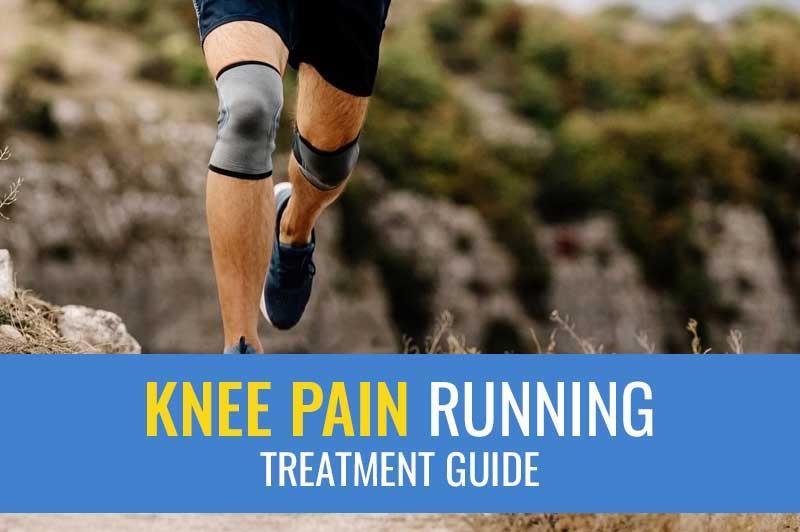
Outer knee pain is one of the most common—and most confusing—complaints runners bring to sports medicine.
A runner may feel perfectly comfortable for the first three miles and then develop sharp pain on the outside of the knee. Another notices pain only when running downhill. Someone else feels discomfort around the outside of the kneecap after a long run. Another runner has swelling, clicking, or pain when twisting and worries about a meniscus tear.
The location sounds similar, but the diagnosis may be very different.
Outer knee pain can come from:
Iliotibial band syndrome
Patellofemoral pain, commonly called runner’s knee
Lateral meniscus irritation or tear
Tendon irritation
Proximal tibiofibular joint problems
Ligament injury
Arthritis
Bone stress injury
Referred pain from the hip or back
The right treatment depends on determining what structure is irritated, what training load triggered it, and what the runner needs to do next.
For runners in Princeton, Lawrenceville, West Windsor, Plainsboro, Hopewell, Pennington, Robbinsville, and throughout Mercer County, this comprehensive guide explains how the major causes of outer knee pain differ, what current treatment emphasizes, when imaging makes sense, and how to return to running without repeating the same cycle.
IT band syndrome usually causes relatively focal pain on the outside of the knee that appears during running and often worsens downhill.
Runner’s knee usually causes more diffuse pain around or behind the kneecap and may hurt with stairs, squats, hills, or prolonged sitting.
Meniscus problems are more likely when pain is directly along the joint line and accompanied by swelling, twisting pain, catching, locking, or restricted motion.
Not every case of outer knee pain comes from the IT band.
Stretching or foam rolling alone rarely solves recurrent IT band syndrome.
Current best practice for patellofemoral pain emphasizes education plus progressive knee and hip strengthening.
Running mechanics can matter, but there is no single “perfect” running form.
Mild stable symptoms may sometimes allow modified running; worsening pain, limping, swelling, locking, or instability should prompt evaluation.
MRI is not automatically needed for running-related knee pain.
Return to running should progress from normal daily function to easy flat running before hills, speed, and longer distances.
Running repeatedly loads the knee, hip, ankle, foot, and surrounding muscles.
That load is not inherently harmful. Healthy tissue adapts to running very well.
Problems often arise when the amount or type of load changes faster than the body can adapt.
Common triggers include:
Increasing mileage
Adding hills
More downhill running
Starting speed work
Returning after a break
Increasing long-run distance
Racing more frequently
Changing shoes
Running on cambered roads
Changing terrain
Adding strength training without adjusting running load
Inadequate recovery between hard sessions
Sometimes mechanics contribute. Sometimes strength or mobility contributes. Often several things happen at once.
The useful question is not simply:
“What is wrong with my knee?”
It is also:
“What changed before the knee started hurting?”
Iliotibial band syndrome, or ITBS, is one of the best-known causes of lateral knee pain in runners.
The iliotibial band is a thick structure running from the outside of the hip toward the upper tibia. Near the knee, repetitive flexion and extension can irritate sensitive tissues around the lateral femoral epicondyle.
Historically, IT band syndrome was described as the band repeatedly “rubbing” over the bone. The modern understanding is more nuanced and likely involves compression and irritation of sensitive tissue in this region rather than simply a tight band scraping back and forth.
That distinction matters because treatment should not revolve around trying to stretch or roll the IT band into submission.
Typical symptoms include:
Focal pain on the outside of the knee
Sharp, burning, or aching pain while running
Pain that starts after a predictable amount of running
Symptoms that improve when the run stops
Pain worse during downhill running
Pain with repeated knee bending
Sometimes discomfort with stairs
Tenderness near the outside of the distal thigh/knee
A classic story is:
“I feel fine for the first 20 minutes, and then the outside of my knee starts hurting.”
That predictable onset is useful diagnostically.
Downhill running changes how forces are absorbed.
The runner typically performs more braking as the body descends, and the knee repeatedly moves through positions that may irritate the lateral knee.
Downhills may also expose:
Poor hip control
Overstriding
Fatigue
Increased braking forces
Rapid training-load increases
A runner may tolerate flat running but develop pain quickly during downhill segments.
That does not necessarily mean the runner must permanently avoid hills.
It means hills may need to be removed temporarily and then reintroduced progressively.
Patellofemoral pain—commonly called runner’s knee—is usually associated with pain around or behind the kneecap.
But patients do not always point directly to the center of the kneecap.
Some describe discomfort toward the outside of the knee, especially near the lateral border of the patella.
This can create confusion with IT band syndrome.
Common features include:
Pain around or behind the kneecap
Pain going downstairs
Pain with squats or lunges
Pain after sitting with the knee bent
Pain during hills
Pain after increased running volume
Aching rather than a single sharp lateral point
Symptoms during repetitive knee loading
The phrase “runner’s knee” is convenient, but patellofemoral pain also occurs in non-runners, adolescents, athletes, and active adults.
More specifically lateral
More likely to begin during the run
Often triggered at a repeatable mileage or time
Frequently aggravated by downhill running
More focal near the lateral femoral epicondyle
More diffuse around the kneecap
More likely to hurt with stairs
Often aggravated by squatting
Often worse after prolonged sitting
Frequently linked to total knee-flexion load
There can be overlap.
A runner may also have more than one problem.
An important update in recent years is that patellofemoral pain treatment has moved further away from searching for one single structural abnormality.
Current best-practice approaches emphasize:
Education
Training-load modification
Progressive knee strengthening
Hip strengthening when appropriate
Building confidence with movement
Individualized running retraining when mechanics appear relevant
Adjuncts such as taping, prefabricated orthotics, manual therapy, or running-form modification may be helpful for certain runners.
They should support the rehabilitation plan—not replace it.
The foundation remains progressive exercise and appropriate loading.
The meniscus is cartilage inside the knee that helps with load distribution and stability.
The lateral meniscus sits on the outside half of the joint.
A meniscus tear may occur from a twisting injury, but degenerative tears can also develop gradually, especially with increasing age.
Possible clues include:
Pain directly along the joint line
Swelling
Pain with twisting
Pain during deep squatting
Clicking or catching
Difficulty fully straightening the knee
Difficulty fully bending the knee
Locking
Pain after a twisting injury
A runner who says:
“My knee hurts on the outside”
may have IT band syndrome.
But a runner who says:
“My knee swelled after the run, hurts right in the joint line, and catches when I turn”
needs a different evaluation.
No.
This is important.
Many meniscus tears—particularly degenerative tears—can be treated non-operatively with appropriate rehabilitation, strength work, activity modification, and symptom management.
Surgery becomes a different discussion when there are issues such as:
A truly locked knee
Certain unstable or displaced tears
Persistent significant mechanical symptoms
Associated ligament injury
Failure to improve despite appropriate treatment
A tear pattern where repair may be advantageous
The MRI finding alone does not determine treatment.
The patient’s symptoms and function matter.
IT band syndrome, patellofemoral pain, and meniscus problems account for many cases, but they are not the entire differential.
One of the hamstring tendons attaches near the fibular head on the outside of the knee.
Pain may be felt farther back and lower than classic IT band syndrome.
It may worsen with:
Resisted knee bending
Faster running
Sprinting
Hamstring loading
The popliteus is a small muscle behind the knee that plays a role in rotational control.
It can occasionally contribute to posterolateral knee pain, particularly in runners or athletes with rotational demands.
The LCL helps stabilize the outside of the knee.
An LCL injury is more likely after trauma or a force pushing the knee outward rather than gradual mileage-related symptoms.
Instability after trauma deserves evaluation.
The joint where the fibula meets the upper tibia can occasionally become symptomatic.
Pain tends to be close to the fibular head and may be confused with tendon or IT band problems.
In older runners and active adults, arthritis can contribute to lateral knee pain.
Clues may include:
Stiffness
Swelling
Reduced range of motion
Pain after prolonged activity
Symptoms with daily activities as well as running
Running itself does not automatically mean the knee is being “worn out.” But existing arthritis may require thoughtful load management.
Bone stress injuries around the knee are less common than IT band or patellofemoral pain, but missing one can have consequences.
Concern increases with:
Focal bone pain
Pain with impact
Pain that progresses during activity
Pain with walking
Night pain
Limping
Rapid training increase
Prior stress fractures
Underfueling or RED-S risk
Menstrual irregularity
Low bone density risk
A runner with progressive focal pain should not simply keep testing the knee.
Yes—although location alone cannot make the diagnosis.
A rough guide:
Sharp focal pain at the lateral femoral epicondyle:
More suggestive of IT band syndrome.
Diffuse pain around or behind the kneecap:
More suggestive of patellofemoral pain.
Pain directly along the lateral joint line:
Raises suspicion for meniscus involvement.
Pain at the fibular head or posterolateral knee:
May involve tendon, ligament, or proximal tibiofibular structures.
Deep pain with swelling or restricted motion:
Makes an intra-articular problem more likely.
Focal pain with impact and walking:
Raises more concern for bone stress injury.
This is a guide—not a substitute for examination.
This is a very useful clue.
If the knee repeatedly starts hurting around mile four, that often tells us something about tissue capacity.
The knee tolerates the first three miles.
Then accumulated load crosses the current threshold.
That does not mean something suddenly tears at mile four.
It often means the training dose exceeds what that tissue can currently handle.
The solution may involve:
Shortening runs temporarily
Run-walk intervals
More recovery
Improving strength
Reducing hills
Altering stride mechanics in selected runners
Building mileage more gradually
Your symptoms may be functioning like a load meter.
Running mechanics can contribute, but we should be careful about oversimplifying.
There is no one perfect running form.
Two runners can look different and both be healthy.
However, certain patterns may be worth addressing when they consistently connect with symptoms.
These may include:
Overstriding
Low cadence in the setting of excessive stride length
Crossover gait
Pelvic drop
Excessive hip adduction
Trunk control changes
High braking forces
Fatigue-related form breakdown
The goal is not to make every runner look identical.
The goal is to determine whether a specific movement pattern is meaningfully increasing the load on the runner’s painful tissue.
Sometimes.
A modest cadence increase can shorten stride length and reduce certain loads in selected runners.
That may be useful if a runner demonstrates:
Clear overstriding
Excessive braking
Symptoms that improve with a small cadence change
But cadence should not be increased automatically in every runner with knee pain.
A gait change is an intervention.
It should have a reason.
If cadence is already appropriate, changing it simply because the knee hurts may provide no benefit.
Heel striking is not automatically bad.
Forefoot striking is not automatically better.
Many healthy runners heel strike.
Changing foot strike can simply move load from one tissue to another. A runner who aggressively converts from heel strike to forefoot striking may reduce certain knee loads while dramatically increasing calf and Achilles demand.
Running-form changes should be targeted rather than ideological.
Hip strength and control may contribute to symptoms in some runners, but saying “your glutes are weak” is usually too simplistic.
IT band syndrome is multifactorial.
Relevant factors can include:
Training load
Hill exposure
Running mechanics
Hip strength
Single-leg control
Fatigue
Recovery
Prior injury
Hip strengthening is often useful because running is a repeated single-leg activity.
But hip exercises should be one part of the plan rather than the entire explanation.
A runner’s strengthening plan may include:
Examples:
Squats
Split squats
Step-ups
Step-downs
Leg press
Knee-extension variations
Examples:
Single-leg Romanian deadlift
Lateral step-down
Hip abduction exercises
Lateral band work
Split squats
Single-leg balance/loading exercises
Examples:
Straight-knee calf raises
Bent-knee calf raises
Single-leg calf work
Examples:
Step-downs
Single-leg squats
Hopping progressions
Running drills where appropriate
The goal is progressive capacity.
A runner training for 40 miles per week needs more than a few clamshells.
This question deserves its own section because runners hear conflicting advice.
Foam rolling can sometimes temporarily:
Reduce soreness
Improve perceived mobility
Feel good after training
But foam rolling does not meaningfully “break up” or lengthen the iliotibial band.
The IT band is extremely strong connective tissue.
Aggressively grinding the painful outside of the knee or lateral thigh is also not necessary.
If foam rolling provides temporary relief, it can be used as an adjunct.
But it does not replace:
Load management
Strength
Running progression
Mechanics assessment when indicated
Recovery
If the only plan is “roll your IT band harder,” the plan is incomplete.
Stretching alone is rarely enough.
Some runners feel better with mobility work directed toward the surrounding hip musculature. That can be reasonable.
But trying to dramatically lengthen the IT band itself is unlikely to solve the underlying load problem.
A better treatment strategy usually includes:
Reducing the provoking load
Restoring strength
Improving single-leg capacity
Gradually reintroducing running
Addressing mechanics where relevant
Shoes can influence loading, but shoe choice is rarely the entire diagnosis.
A problem may appear after:
Switching to a dramatically different shoe
Changing heel-to-toe drop
Changing cushioning
Moving into a racing shoe
Suddenly using carbon-plated shoes more often
Running in worn footwear
But repeatedly buying new shoes without addressing the actual problem can become expensive trial and error.
The best shoe is generally one that is comfortable, appropriate for the runner, and introduced sensibly.
Orthotics may help selected runners, particularly when a trial changes symptoms during a relevant task.
They are not required for every case of IT band or patellofemoral pain.
For patellofemoral pain specifically, prefabricated orthotics may be one useful supporting treatment in appropriately selected patients.
They should support active rehabilitation rather than replace it.
Sometimes.
The decision depends on symptoms.
Modified running may be reasonable when:
Pain is mild
Pain remains stable
There is no swelling
You are not limping
Your stride does not change
Symptoms settle quickly
You are back to baseline by the next day
Possible modifications:
Shorter runs
Flat routes
Easy pace
Run-walk intervals
More recovery between runs
Reduce or temporarily pause running when:
Pain starts earlier every run
Pain progressively increases
Symptoms linger the next day
Stairs are becoming painful
You subtly change your gait
The same pain returns despite reduced training
This is often the ideal time for evaluation before the problem becomes harder to manage.
Stop running and get evaluated when there is:
Significant swelling
Locking
Buckling
Giving way
Inability to fully straighten the knee
Inability to bear weight normally
Limping
Severe or rapidly worsening pain
A traumatic pop
Fever with a red or swollen joint
Focal bone pain with walking
New significant numbness or weakness
Usually not at the beginning.
Many cases of IT band syndrome and patellofemoral pain are diagnosed clinically.
MRI may become useful when there is:
Significant swelling
Locking or mechanical symptoms
A traumatic injury
Concern for meniscus or cartilage injury
Concern for bone stress injury
Persistent pain despite appropriate rehabilitation
Unclear diagnosis
Surgical decision-making
An MRI should answer a clinical question.
It should not simply be ordered because the runner has knee pain.
This is particularly important with meniscus imaging because abnormalities become more common with age and may not always be responsible for the pain.
Instead of stopping everything, identify the highest-load trigger.
Examples:
Pain only downhill:
Temporarily remove downhill running.
Pain appears late in long runs:
Reduce long-run duration.
Pain after speed workouts:
Pause or reduce speed before eliminating easy running.
Pain after both mileage and hill increase:
Reverse one or both recent changes.
Pain every day regardless of training:
The knee may need a larger reduction in load and an evaluation.
The goal is to reduce the provocative dose while maintaining as much safe activity as possible.
Depending on the diagnosis, runners may tolerate:
Cycling
Swimming
Pool running
Elliptical
Rowing
AlterG running
Strength training
The activity is appropriate if it does not significantly aggravate symptoms during or afterward.
Cross-training helps preserve fitness while running load is temporarily reduced.
Before returning to running, useful benchmarks include:
Normal walking
Minimal symptoms on stairs
No significant swelling
Basic squatting without meaningful flare
Good step-down control
Tolerance of strength exercises
No worsening next-day pain
A return may then progress through:
Short run intervals separated by walking.
Flat terrain, easy pace.
Build total running time before intensity.
Gradually rebuild frequency and volume.
Reintroduce hills only after flat running is stable.
Add intervals, tempo work, and faster running later.
Restore the unique load required for the athlete’s event.
Do not simultaneously add distance, hills, and speed.
Change one major stressor at a time.
The knee’s response the next day is one of the most useful guides.
A run may be appropriate if:
Symptoms stay mild
They settle afterward
The knee is back to baseline the next morning
The load may have been too high if:
Pain persists or worsens overnight
Stairs are worse the next morning
The knee feels swollen
Pain begins earlier during the next run
Recovery is not only what happens during the workout.
It is also how the tissue responds afterward.
Recurrent pain often happens because the runner treats symptoms without changing capacity or load.
Common cycles include:
Rest → pain improves → immediately resume previous mileage → pain returns.
Foam roll → temporary relief → continue the same hill volume → pain returns.
Change shoes → improve briefly → increase training again → pain returns.
A better approach asks:
What triggered the flare?
What capacity is missing?
What should be strengthened?
What running load is currently tolerated?
Are mechanics contributing?
What progression will prevent the same jump in load?
Runners throughout Princeton, Lawrenceville, West Windsor, Plainsboro, Hopewell, Pennington, Robbinsville, and Mercer County often come to PSFM after several rounds of self-treatment.
They may have tried:
Rest
New shoes
Foam rolling
Stretching
Knee braces
Anti-inflammatory medication
Online exercises
Symptoms improve temporarily but return when mileage climbs again.
At that point, the goal should shift from repeatedly calming the knee to understanding why the same threshold keeps being crossed.
At Princeton Sports and Family Medicine, outer knee pain in runners is evaluated by combining the knee diagnosis with the runner’s training history, strength, mechanics, and goals.
Sports Medicine Services can help distinguish IT band syndrome, patellofemoral pain, meniscus problems, tendon pain, ligament injury, arthritis, bone stress injury, and other sources of lateral knee pain.
Physical Therapy can help rebuild quadriceps, hip, calf, and single-leg strength while progressing the runner safely back to mileage, hills, and speed.
For runners whose symptoms repeatedly return, the Run Stride & Performance Evaluation provides a more detailed assessment of running mechanics, including stride characteristics, foot path, loading patterns, strength, and movement control.
Additional condition-specific resources include IT Band Syndrome, Patellofemoral Pain, and Meniscus Tear.
For longer-term strength and performance development, runners may also benefit from PSFM Wellness and Fuse Sports Performance.
The goal is not simply to make the knee stop hurting.
The goal is to understand why it hurts, what it can tolerate now, and how to build enough capacity to keep running.
Outer Knee Pain in Runners: IT Band Syndrome vs Runner’s Knee vs Meniscus Pain
Should You Keep Running With Knee Pain? A Practical Green-Yellow-Red Guide
IT band syndrome is a common cause of focal pain on the outside of the knee, but patellofemoral pain, meniscus injury, tendons, arthritis, and other problems can produce similar symptoms.
IT band syndrome is typically more focal on the outside of the knee and often develops during running, particularly downhill. Runner’s knee is usually more diffuse around or behind the kneecap and may hurt with stairs, squats, hills, or sitting.
Meniscus symptoms may include joint-line pain, swelling, pain with twisting, catching, locking, or difficulty fully straightening or bending the knee. An examination can help distinguish this from common running-overuse conditions.
Pain that begins at a repeatable mileage often suggests that accumulated running load is exceeding the current capacity of the irritated tissue. Temporarily adjusting distance while rebuilding strength and tolerance can be more useful than simply resting until the pain disappears.
Downhill running increases braking demands and changes knee loading. This often aggravates IT band syndrome and can also provoke patellofemoral pain.
Foam rolling may temporarily reduce soreness or improve perceived mobility, but it does not permanently lengthen the IT band and should not be the primary treatment for IT band syndrome.
Sometimes. Mild symptoms that remain stable, do not alter your gait, and return to baseline by the next day may allow modified running. Increasing pain, limping, or persistent symptoms mean the load should be reduced.
Usually not initially. MRI becomes more useful when there is significant swelling, locking, trauma, persistent symptoms, concern for bone stress injury, or another structural problem that would change treatment.
Sometimes a targeted change helps, particularly if a specific pattern is clearly contributing to symptoms. But runners should not automatically change cadence, foot strike, or every aspect of form simply because the knee hurts.
The exercises depend on the diagnosis. Programs frequently include progressive quadriceps, hip, glute, calf, and single-leg strengthening rather than relying only on stretching or foam rolling.
Recovery varies with symptom severity, training load, duration of symptoms, and how effectively contributing factors are addressed. Mild cases may improve relatively quickly, while longstanding or recurrent cases can require a more structured rehabilitation and return-to-running progression.
Princeton Sports and Family Medicine evaluates IT band syndrome, runner’s knee, meniscus injuries, and other causes of lateral knee pain in Lawrenceville for runners and active adults from Princeton and surrounding Mercer County communities.
Outer knee pain in runners is not one diagnosis.
IT band syndrome typically causes more focal lateral knee pain and often appears predictably during running, especially downhill. Patellofemoral pain more commonly causes discomfort around or behind the kneecap and may hurt with stairs, squats, hills, or sitting. Meniscus problems become more concerning when there is joint-line pain, swelling, twisting pain, catching, or locking.
Treatment should go beyond simply resting, stretching, changing shoes, or foam rolling.
A complete plan asks:
What is the diagnosis?
What training load triggered it?
What strength or movement capacity needs to improve?
What running can safely continue?
How should mileage, hills, and speed be rebuilt?
For runners whose pain keeps returning—or anyone with swelling, limping, mechanical symptoms, or uncertainty about the diagnosis—a sports medicine evaluation can help replace guessing with a specific plan.
If outer knee pain is limiting your running or returning every time your mileage increases, request an appointment with Princeton Sports and Family Medicine.
This article is for educational purposes and is not a substitute for individualized medical advice. Seek prompt medical evaluation for major swelling, inability to bear weight, a locked knee, significant instability, severe pain after trauma, fever with a hot or swollen joint, progressive focal bone pain, new neurologic symptoms, or symptoms that are rapidly worsening.