Stress Fracture Recovery Timeline: When Can You Walk, Cross-Train, Run, and Race Again?
Recovering from a stress fracture? Learn when walking, cross-training, running, speed work, and racing can safely return- and why location matters.
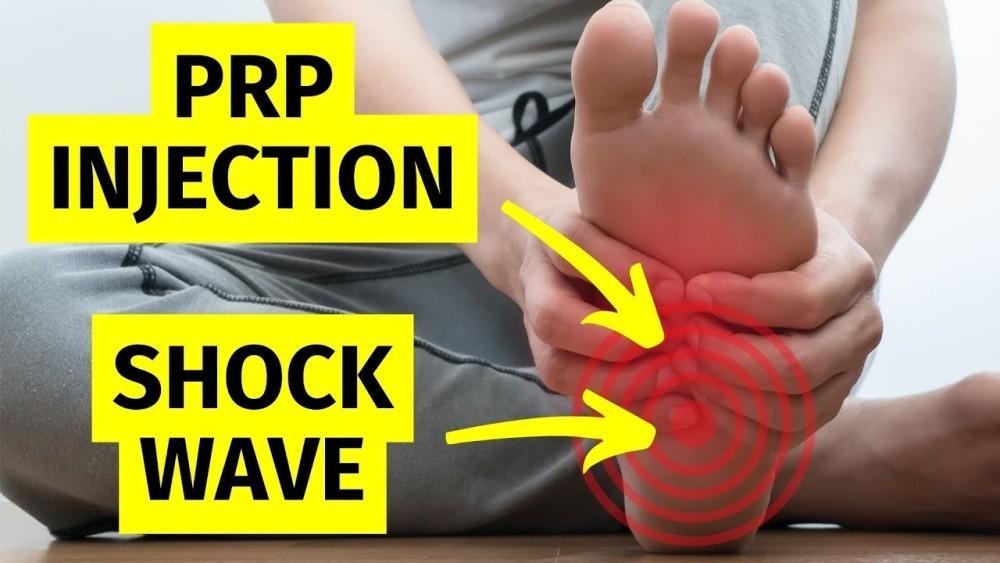
PRP and shockwave therapy are two treatment options patients often ask about when an injury will not go away.
A runner has chronic Achilles pain. A pickleball player has tennis elbow. A lifter has patellar tendon pain. Someone with plantar fasciitis has tried rest, shoes, stretching, and physical therapy but still has pain every morning. An athlete with a tendon injury wants to avoid surgery if possible.
That is usually when the question comes up:
“Should I try PRP or shockwave therapy?”
The answer depends on the diagnosis, the tissue involved, how long symptoms have been present, what treatments have already been tried, the patient’s goals, and whether the painful area is appropriate for one treatment, the other, both, or neither.
For patients in Princeton, Lawrenceville, West Windsor, Plainsboro, Hopewell, Pennington, Robbinsville, and Mercer County, the goal is not simply to choose the newest procedure. The goal is to choose the right treatment for the right problem at the right time, while still addressing the training, strength, mechanics, and load issues that caused the problem to persist.
Patients usually ask about PRP or shockwave when they feel stuck.
They may have already tried:
Sometimes those treatments help, but not enough. Sometimes pain improves during rest but returns as soon as the patient resumes running, lifting, sport, or work. Sometimes the patient wants a non-surgical option before considering a more invasive pathway.
That is where PRP and shockwave enter the conversation.
They may be useful in selected cases, but they should not be the first answer for every pain problem.
The first question is always: what is the diagnosis?
PRP stands for platelet-rich plasma.
PRP therapy involves drawing a small amount of the patient’s blood, processing it to concentrate platelets in plasma, and then injecting that preparation into a targeted painful or injured area.
Platelets contain signaling proteins and growth factors that may help stimulate a healing response. PRP is often discussed for tendon injuries, ligament injuries, and some joint-related problems.
Patients often ask about PRP for:
The key is not simply whether PRP exists. The key is whether PRP fits the patient’s diagnosis and stage of care.
Shockwave therapy uses acoustic pressure waves applied through the skin to a targeted painful area.
In sports medicine, radial shockwave therapy is often considered for chronic tendon, fascia, and overuse-related pain. It is noninvasive, does not require a blood draw, and is usually performed as a series of office treatments.
Patients often ask about shockwave therapy for:
Shockwave therapy is not a diagnosis. It is a treatment tool.
It works best when the painful tissue has been identified and when treatment is paired with a plan to improve tissue capacity over time.
The simplest difference is this:
PRP is an injection.
Shockwave therapy is noninvasive.
PRP delivers a concentrated blood-derived product into a targeted tissue or joint. Shockwave applies mechanical acoustic energy externally over the painful area.
That difference affects:
Neither is automatically better. They are different tools for different situations.
A sports medicine evaluation helps decide which tool, if any, makes sense.
PRP may be considered when a patient has a specific tendon, ligament, or joint problem that has not improved enough with initial care and where an injection-based biologic treatment may be reasonable.
PRP may be considered when:
PRP is often not a quick fix. Symptoms may be sore after the injection, and recovery usually requires a staged return.
The value of PRP depends on choosing the right patient and following the right plan afterward.
Shockwave therapy may be considered when a patient has chronic tendon, fascia, or overuse-related pain that has plateaued despite reasonable conservative care.
Shockwave may be considered when:
Shockwave often fits well when the patient has chronic tendon or fascia pain and wants to keep progressing without an injection.
But it is not right for every painful area. It should be matched to the diagnosis.
Many patients seek PRP or shockwave because tendon pain has become chronic.
Chronic tendon pain is often not just an inflammation problem. It is frequently a load tolerance problem.
That means the tendon is not tolerating the forces being placed on it.
If the underlying load problem is not addressed, pain may return even after a procedure.
A complete tendon plan often includes:
PRP and shockwave may support recovery in selected cases, but they do not replace the need to rebuild capacity.
Shockwave therapy may be a good fit when the pain is chronic, tendon- or fascia-related, and accessible from the surface.
Common examples include:
Shockwave may be especially appealing when:
Shockwave is usually less invasive than PRP, but it still requires commitment. A series of treatments and rehab progression are often needed.
PRP may be considered when the target is deeper, injection-accessible, or when the goal is a biologic injection into a specific tendon, ligament, or joint region.
Examples may include:
PRP may be more involved than shockwave because it is an injection procedure. The patient may need a period of modified activity afterward. The rehab plan needs to respect tissue irritability and healing goals.
PRP is not simply “stronger shockwave.” It is a different category of treatment.
If the diagnosis is unclear, do not start with the procedure.
Start with evaluation.
The same symptom can come from several sources. Heel pain may be plantar fascia, nerve irritation, stress injury, fat pad pain, or Achilles-related pain. Elbow pain may be tendon pain, nerve irritation, joint pain, or neck referral. Hip pain may be glute tendon, bursitis, hip joint, back referral, or stress injury.
If the diagnosis is wrong, the treatment is less likely to help.
A sports medicine evaluation may include:
PRP or shockwave should be chosen after the problem is understood.
Imaging is not always required before PRP or shockwave, but it can be helpful in selected cases.
Imaging may help when:
Depending on the condition, imaging may include X-ray, ultrasound, MRI, or other testing.
The goal is not to image everything. The goal is to use imaging when it changes the decision.
Patients often ask how PRP and shockwave compare with cortisone injections.
Cortisone injections can reduce inflammation and pain in selected conditions. They may be helpful when pain is limiting sleep, function, or participation in rehab. But for some chronic tendon problems, repeated steroid-based approaches may not address tendon capacity.
PRP is often discussed as a biologic injection option intended to support a healing response rather than simply reduce inflammation.
Shockwave is a noninvasive treatment aimed at stimulating a local tissue response and improving pain in selected chronic tendon or fascia conditions.
The right option depends on:
There is no one-size-fits-all answer.
PRP may be discussed in some joint-related pain or arthritis situations, depending on the joint, severity, goals, imaging, and patient preferences.
Shockwave is generally more often discussed for tendon, fascia, and soft-tissue overuse conditions, rather than as a primary arthritis treatment.
For arthritis, the broader plan may include:
A patient with knee arthritis needs a different discussion than a patient with Achilles tendinopathy or tennis elbow.
PRP is usually an office-based procedure.
A typical process may include:
Patients may have soreness after the injection. The recovery timeline depends on the condition and treatment target.
PRP is not usually a same-day return-to-max-activity treatment.
The treatment should be planned around work, sport, competition, and rehab.
Shockwave therapy is also typically performed in the office.
A typical process may include:
The treatment may feel uncomfortable during the session, especially over sensitive tissue, but it is usually brief.
Some patients feel soreness afterward. Others notice gradual improvement over a series of sessions.
Shockwave should not be treated like a passive treatment that does everything by itself.
PRP and shockwave often have different timelines.
PRP may require more deliberate activity modification after the injection because the goal is to allow a biologic response and gradual tissue loading. The timeline depends on the tissue treated, severity of injury, sport demands, and physician guidance.
Shockwave therapy may allow more ongoing activity in many cases, but painful overload still needs to be managed. The patient may continue modified training or rehab, depending on symptoms and diagnosis.
In both cases, return to activity should be based on:
The timeline should fit the diagnosis, not the marketing promise.
PRP or shockwave may not be appropriate if:
Specific medical conditions, medications, pregnancy status, bleeding risk, or other factors may affect candidacy and should be reviewed with a clinician.
Before choosing PRP or shockwave, ask:
The more specific the answer, the better the plan.
Common mistakes include:
A procedure is only one part of a recovery strategy.
The best outcomes usually come from matching the treatment to the problem and supporting it with rehab.
Patients in Princeton, Lawrenceville, West Windsor, Plainsboro, Hopewell, Pennington, Robbinsville, and Mercer County often ask about PRP or shockwave therapy after months of symptoms.
They may be asking:
Those questions deserve an individualized sports medicine evaluation.
At Princeton Sports and Family Medicine, PRP and shockwave therapy are considered within a broader non-operative sports medicine plan.
Sports Medicine Services can help evaluate the diagnosis, determine whether imaging is needed, and decide whether PRP, shockwave, physical therapy, activity modification, or another option fits the problem.
Platelet Rich Plasma therapy may be considered for selected tendon, ligament, or joint problems when an injection-based biologic option is appropriate.
Shockwave Therapy may be considered for selected chronic tendon, fascia, or overuse-related pain when it fits the diagnosis and recovery plan.
Physical Therapy can help restore strength, tendon capacity, movement control, and gradual return-to-activity tolerance.
For condition-specific education, PSFM provides pages on Tendinopathy, Training Around Tendinopathy, and A-Z Conditions.
PSFM Wellness can support healthy exercise, recovery, and long-term wellness habits. Fuse Sports Performance can help athletes and active adults build strength, durability, and performance capacity once symptoms are controlled.
The goal is not simply to choose a procedure. The goal is to build the right recovery pathway.
PRP is an injection that uses a concentrated portion of the patient’s own blood. Shockwave therapy is noninvasive and uses acoustic pressure waves applied externally over a painful area.
Not automatically. PRP and shockwave are different tools. The better option depends on the diagnosis, tissue involved, symptom duration, prior treatments, recovery timeline, and patient goals.
No. Shockwave therapy is usually most useful when paired with a broader plan that includes load management, strengthening, and gradual return to activity.
No. PRP may support a healing response in selected cases, but rehabilitation, activity modification, and progressive loading still matter.
Shockwave may be considered for selected chronic tendon, fascia, or overuse problems such as plantar fasciitis, Achilles tendinopathy, tennis elbow, golfer’s elbow, patellar tendinopathy, gluteal tendon pain, and certain shoulder tendon conditions.
PRP may be considered for selected tendon, ligament, or joint problems when a biologic injection is appropriate and fits the diagnosis, imaging, symptoms, and goals.
Not always. Imaging may be useful when the diagnosis is unclear, a tear or stress injury is suspected, symptoms persist despite care, or the result would change treatment.
Princeton Sports and Family Medicine evaluates tendon pain, sports injuries, PRP candidacy, shockwave therapy candidacy, and non-operative recovery plans in Lawrenceville for patients in Princeton and surrounding Mercer County communities.
PRP and shockwave therapy are both useful options in the right setting, but they are not interchangeable and neither is a guaranteed fix.
PRP is an injection-based biologic treatment. Shockwave therapy is a noninvasive treatment often used for selected chronic tendon or fascia pain. The best choice depends on the diagnosis, tissue involved, prior treatment response, recovery timeline, and activity goals.
If chronic tendon, fascia, joint, or sports-related pain is limiting your training, work, sport, or daily life, request an appointment with Princeton Sports and Family Medicine to discuss whether PRP, shockwave therapy, physical therapy, or another pathway makes sense.
This content is educational only and is not a substitute for individualized medical advice. If you have severe pain, rapidly worsening symptoms, inability to bear weight, major trauma, new weakness, numbness, tingling, fever, redness, warmth, significant swelling, chest pain, fainting, or other concerning symptoms, seek medical evaluation.