Outer Knee Pain in Runners: The Complete Guide to IT Band Syndrome, Runner’s Knee, Meniscus & Others
Outer knee pain in runners may come from IT band syndrome, runner’s knee, meniscus, tendons, or training overload. Learn how to tell.
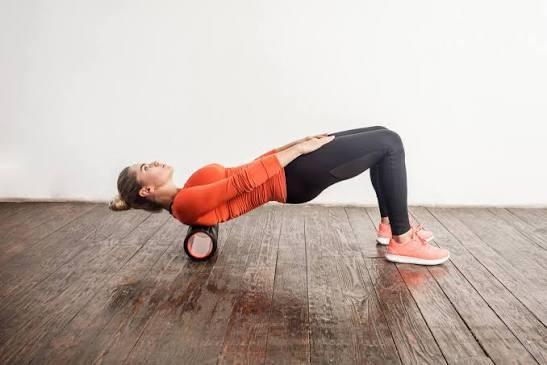
Foam rollers, massage balls, massage sticks, and massage guns have become almost standard equipment for runners, athletes, lifters, and active adults.
Walk into a gym and you may see someone rolling their calves before a run, sitting on a massage ball after lifting, or using a massage gun on a tight quadriceps muscle.
The claims surrounding these tools can be enormous.
“Break up scar tissue.”
“Release the fascia.”
“Flush out toxins.”
“Eliminate muscle knots.”
“Speed healing.”
“Prevent injuries.”
Some of those claims go far beyond what the evidence actually supports.
That does not mean self-myofascial release, or SMR, is useless.
Used appropriately, foam rollers and similar tools can be helpful for temporarily improving range of motion, reducing the perception of stiffness or soreness, and helping some people feel more comfortable before or after exercise.
The important word is temporarily.
SMR works best as one tool within a larger approach that still includes appropriate exercise, progressive strengthening, training-load management, sleep, nutrition, and medical or physical therapy care when pain represents an actual injury.
For patients and athletes in Princeton, Lawrenceville, West Windsor, Plainsboro, Hopewell, Pennington, Robbinsville, and throughout Mercer County, here is a comprehensive look at what self-myofascial release really does, what it probably does not do, and how to use the different tools safely.
Foam rolling can temporarily improve range of motion without consistently reducing strength or performance.
It may help some people feel less sore after exercise, although the effect is modest and research is not completely consistent.
Foam rolling does not literally break apart the IT band or permanently lengthen fascia.
A painful “muscle knot” is more complicated than a physical knot that must be mechanically crushed.
Massage guns may improve short-term flexibility or perceived stiffness, but more pressure is not necessarily better.
SMR can be useful before exercise if followed by an active warm-up.
After exercise, it may be used for comfort or recovery, but it does not replace sleep, nutrition, hydration, or appropriate programming.
Do not aggressively roll directly over acute injuries, fractures, open wounds, significantly inflamed tissue, or suspected blood clots.
Persistent focal pain, weakness, swelling, bruising, numbness, or loss of function should not simply be “rolled out.”
If you have to use a recovery tool every day just to tolerate the same activity, it is worth asking why the problem keeps returning.
Self-myofascial release is a broad term used to describe self-applied pressure or massage to muscles and surrounding soft tissues.
Common SMR tools include:
Foam rollers
Massage sticks
Roller sticks
Massage balls
Lacrosse-style balls
Peanut-shaped massage balls
Trigger-point devices
Massage guns
Vibrating foam rollers
The person controls the pressure, duration, and location.
The technique became popular partly from manual therapy concepts involving fascia, trigger points, and soft-tissue restriction.
But the phrase “myofascial release” can create the wrong mental picture.
You are probably not mechanically releasing a stuck sheet of fascia or breaking apart tissue adhesions with a foam roller.
The effects are likely more complex.
Fascia is connective tissue that surrounds and connects muscles, nerves, blood vessels, organs, and other structures throughout the body.
It is real tissue and plays an important role in force transmission and movement.
But fascia is also strong.
A foam roller does not simply flatten, melt, or permanently lengthen fascia during a few minutes of rolling.
That does not mean rolling has no effect.
Pressure applied to muscles and connective tissue may alter:
Sensation
Pain perception
Muscle tone
Stretch tolerance
Temporary tissue stiffness
Local circulation
How comfortable movement feels
Those changes may allow someone to move through a greater range of motion for a period of time.
That is useful.
It just is not the same as physically “breaking up” fascia.
The strongest evidence for foam rolling is related to range of motion.
Research has repeatedly found that foam rolling can temporarily improve flexibility or joint range of motion.
That makes it potentially useful before activities in which mobility is helpful.
Importantly, these improvements generally do not appear to come with the same concern about short-term performance reduction sometimes associated with prolonged static stretching immediately before explosive activity.
Research on recovery is more mixed.
Some studies and reviews suggest foam rolling may reduce perceived delayed-onset muscle soreness, or DOMS.
Other analyses have found that improvements in objective recovery measures are small or inconsistent.
That distinction is important.
You may feel better after rolling without meaningfully speeding the biological repair of exercised muscle.
That can still be valuable.
Comfort matters.
But we should not confuse feeling less sore with instantly repairing damaged tissue.
Probably not in a meaningful way by itself.
Foam rolling is unlikely to make you:
Significantly faster
Stronger
More powerful
Better conditioned
Less injury-prone on its own
Some studies show small changes in performance outcomes, while others show little effect.
Its better use is usually as a supporting tool.
For example:
Foam roll briefly → feel less stiff → perform an active warm-up → train normally.
That makes more sense than:
Foam roll for 30 minutes → assume you are ready to sprint.
The roller is preparation.
It is not training.
It can.
Delayed-onset muscle soreness usually appears after unfamiliar or intense exercise, particularly exercise with a high eccentric component.
Examples include:
Downhill running
Heavy squats
Lunges
Sprinting
Plyometrics
A new strength workout
Foam rolling may help some people perceive less soreness or stiffness during the following day or two.
But DOMS already resolves naturally.
The major recovery tools remain:
Time
Sleep
Appropriate nutrition
Hydration
Light movement
Gradual training progression
If rolling feels good, use it.
If rolling an already sore muscle aggressively makes it feel worse, stop.
More discomfort does not mean more recovery.
There is no universally best tool.
The right choice depends on what you are trying to accomplish.
A traditional foam roller distributes pressure across a relatively large area.
It works well for:
Quadriceps
Calves
Hamstrings
Gluteal muscles
Upper back
Larger muscle groups
Advantages:
Inexpensive
Simple
Easy to control
Good for broad areas
Does not require electricity
Pressure can be adjusted with body weight
Disadvantages:
Difficult to target small areas precisely
Some positions require upper-body strength
Can be uncomfortable
Easy to use too aggressively
For most people, a basic medium-density roller is enough.
You do not need the hardest roller available.
A handheld stick allows more control over pressure than a body-weight foam roller.
It works especially well for:
Calves
Quadriceps
Hamstrings
Forearms
Advantages:
Easy pressure control
Portable
Useful when getting onto the floor is difficult
Good for runners before an event
Because you control pressure with your hands, it can be easier to avoid overdoing it.
A massage ball concentrates pressure into a much smaller area.
It may be helpful for:
Gluteal muscles
Plantar foot muscles
Upper back muscles
Chest/pectoral muscles
Small localized areas of muscular tension
A tennis ball provides gentler pressure.
A firmer massage ball produces more intense pressure.
A lacrosse-style ball can become extremely uncomfortable quickly.
That does not automatically make it more effective.
Two connected balls create a channel between them.
These can be useful around the muscles next to the spine because the center space reduces direct pressure over the spinous processes.
They may be used around:
Thoracic paraspinal muscles
Upper back
Some cervical-adjacent musculature
They should still be used gently.
Do not aggressively compress the neck or spine.
Massage guns deliver rapid repetitive percussion.
They are popular because they are easy to use and feel powerful.
Potential benefits may include temporary improvements in:
Range of motion
Perceived stiffness
Flexibility
Comfort
However, massage-gun evidence remains less developed than foam-rolling evidence.
A massage gun should not be thought of as a stronger or more advanced foam roller.
It is simply another way of applying mechanical stimulation.
No.
This may be the most important practical lesson in SMR.
People often assume:
More pain = deeper release = better result.
That is not supported by good reasoning.
Extremely painful pressure may cause guarding rather than relaxation. It may irritate an already sensitive tendon, muscle, nerve, bursa, or injured tissue.
The goal is generally tolerable pressure, not maximal pain.
A useful rule is that you should be able to:
Breathe normally
Relax the muscle
Avoid grimacing
Avoid holding your breath
Move normally afterward
If you are fighting the tool, the intensity is probably too high.
People commonly describe painful areas as knots.
The sensation is real.
But there usually is not a literal knot tied inside the muscle.
A painful focal area may involve:
Increased muscle tone
Local sensitivity
Trigger-point phenomena
Overloaded tissue
Referred pain
Tendon pain
Fatigue
Protective muscle guarding
Massage or pressure may temporarily reduce discomfort.
But repeatedly attacking the same “knot” without asking why it keeps returning can miss the larger issue.
If the knot reappears after every run, lift, or workday, consider:
Training load
Strength
Ergonomics
Recovery
Technique
Sleep
An underlying injury
The better question may be:
Why does this area need to tighten or become painful every day?
You do not need a 30-minute foam-rolling ritual.
Research protocols vary considerably, but useful changes in range of motion have been observed with relatively modest doses.
For practical use, try approximately:
30–60 seconds over a muscle group initially
Up to 1–2 minutes if it feels helpful
One or two passes through the areas that matter
You do not need to roll every muscle in your body before every workout.
Focus on a reason.
For example:
“My calves feel stiff before running.”
That is a better reason to spend a minute rolling the calves than simply rolling ten body parts because a checklist says you should.
Slow and controlled usually works better than racing back and forth.
Move gradually over the muscle.
If you find a sensitive area, you can:
Pause briefly
Reduce pressure
Breathe
Gently move the nearby joint
There is no need to grind repeatedly into severe pain.
Foam rolling can be useful before exercise when the goal is temporary mobility or reducing the feeling of stiffness.
A simple warm-up might look like:
Brief foam rolling to the relevant areas
Dynamic mobility
Activation or strength preparation
Sport-specific movements
Gradually increasing intensity
For a runner:
Brief calves/quads if they feel stiff
Dynamic leg movements
Easy jogging
Running drills
Strides if appropriate
For a lifter:
Brief rolling where needed
Active mobility
Empty-bar or light-load sets
Progressive warm-up sets
Foam rolling should not replace an active warm-up.
You can if it feels good.
Post-exercise foam rolling may help reduce the perception of stiffness or soreness.
But it is optional.
If you finish a workout and feel good, there is no requirement to foam roll.
Recovery is driven much more strongly by:
Sleep
Nutrition
Adequate protein
Carbohydrate replacement when appropriate
Hydration
Training-load management
Time between hard sessions
Do not let a recovery gadget distract from basic recovery habits.
Few areas are rolled more aggressively than the IT band.
The classic advice has been:
“Your IT band is tight. Roll it until it loosens.”
That is an oversimplification.
The iliotibial band is a very strong connective-tissue structure. A few minutes on a foam roller are not meaningfully lengthening it.
If someone with IT Band Syndrome feels temporary relief after rolling the outer thigh, that is fine.
But treatment should not stop there.
Recurrent IT band symptoms may require attention to:
Running load
Hills
Downhill running
Hip strength
Single-leg control
Running mechanics
Recovery
Progressive return to running
And directly grinding over the painful lateral knee is often unnecessarily irritating.
Use foam rolling as an adjunct—not the diagnosis and not the cure.
Generally, avoid aggressively putting your full body weight onto a hard roller directly across the lumbar spine.
The low back does not have the same broad muscular padding and rib support as the thoracic region.
For back stiffness, it may be more useful to target:
Glutes
Hip musculature
Thoracic spine
Surrounding muscles
and combine that with movement and strengthening.
Persistent back pain should not be treated simply by rolling harder.
Yes, many people tolerate gentle thoracic foam rolling well.
A roller may be used for:
Upper-back extension
Thoracic mobility
Muscles surrounding the shoulder blades
Avoid aggressively rolling directly into the neck.
If upper-back symptoms include numbness, weakness, significant trauma, chest symptoms, or pain radiating into the arm, get evaluated rather than repeatedly treating the area yourself.
The calves are often good candidates for gentle SMR.
Runners may use:
Foam roller
Massage stick
Massage gun
for temporary calf stiffness.
But recurrent focal calf pain deserves more thought.
Calf pain can come from:
Muscle strain
Soleus overload
Achilles-related problems
Nerve irritation
Chronic exertional compartment syndrome
Less commonly, vascular problems
Sudden calf swelling, warmth, redness, or unexplained significant pain should not be aggressively massaged because blood clots and other conditions need to be considered.
Yes, but context matters.
General post-training hamstring tightness may respond comfortably to foam rolling.
A new hamstring strain is different.
If there has been:
A sudden pull
A pop
Bruising
Weakness
Limping
Focal pain
do not assume aggressive rolling will accelerate healing.
PSFM’s Muscle Strain guidance emphasizes protection and progressive loading rather than aggressive early stretching or deep tissue work.
An injured muscle needs rehabilitation, not punishment.
The quadriceps generally tolerate foam rolling well.
This may be useful after:
Cycling
Running
Squatting
Hiking
Field sports
The hip-flexor region requires more caution because important nerves, arteries, abdominal structures, and the hip joint are nearby.
Avoid driving a hard ball or massage gun deeply into the front of the abdomen or groin.
If pain is deep, persistent, or associated with hip-joint symptoms, get evaluated.
Massage balls and rollers are commonly used around the buttock.
This can feel helpful for muscular soreness.
But pain in this region can also come from:
Lumbar spine
Sciatic nerve
Hip joint
Gluteal tendon
Proximal hamstring
SI region
If pressure sends tingling or electric pain down the leg, stop.
Nerves do not need to be aggressively “released.”
A ball under the foot can feel good for arch stiffness.
A tennis ball, massage ball, or similar device can be rolled gently under the plantar surface.
But chronic heel or arch pain may represent plantar fasciitis, bone stress injury, nerve irritation, or another condition.
Again, symptomatic relief is not the same as fixing the cause.
Do not use a massage gun aggressively over:
Front or side of the neck
Major blood vessels
Open wounds
Acute fractures
Directly over significant bruising
Acutely injured tissue
Areas of unexplained swelling
Numb areas where sensation is reduced
Directly over superficial nerves
The abdomen or groin without appropriate guidance
People with bleeding disorders, anticoagulant medication, vascular disease, recent surgery, significant osteoporosis, pregnancy-related concerns, or other medical conditions should discuss use with a clinician when there is uncertainty.
A massage gun is a tool—not automatically a harmless toy.
Expert safety guidance specifically supports avoiding foam rolling over open wounds and fractures and exercising caution when conditions such as acute local inflammation or deep vein thrombosis may be present.
Practical reasons to stop include:
Sharp pain
Increasing swelling
Significant bruising
Numbness
Tingling
Electrical pain
Severe tenderness after trauma
Suspected fracture
Suspected blood clot
Skin infection
Open wounds
If a body part looks significantly injured, diagnose it before repeatedly applying pressure.
There is not strong evidence that foam rolling by itself prevents injuries.
Injury prevention is much more closely tied to the broader training system:
Appropriate progression
Strength
Conditioning
Adequate recovery
Sport-specific preparation
High-speed exposure where needed
Managing rapid training spikes
Sleep
Nutrition
If you enjoy foam rolling before training, keep doing it.
Just do not assume it makes you injury-proof.
This is another common claim.
Post-exercise muscle soreness is not simply caused by lactic acid trapped in the muscles.
Lactate is produced and cleared relatively quickly during and after exercise. DOMS typically develops many hours later.
You do not need to “flush toxins” from your muscles with a foam roller.
The body already has systems for processing metabolic byproducts.
Foam rolling may help you feel better.
That is enough of a reason to use it.
We do not need a detox explanation.
No—and stretching does not replace foam rolling either.
They overlap somewhat because both can improve range of motion.
Which one is more useful depends on the goal.
For someone who enjoys stretching and responds well to it, stretching may be enough.
For someone who dislikes stretching but likes rolling, foam rolling may provide temporary mobility.
For many athletes, a combination of brief mobility work followed by active movement works well.
Neither technique replaces strength.
Possibly, but the long-term data are less compelling than the immediate effects.
Repeated foam rolling over several weeks may improve range of motion in some people.
But if long-term mobility is the goal, also consider:
Strength through full ranges
Consistent mobility work
Progressive exposure
Sport-specific movement
Addressing actual joint restrictions
The ability to control a range of motion is often more useful than simply possessing passive flexibility.
You do not need complexity.
For a runner with calf and quad stiffness:
Calves:
30–60 seconds each
Quadriceps:
30–60 seconds each
Glutes if needed:
30–60 seconds each
Then:
Dynamic mobility
Easy jogging
Running drills
Gradual build in pace
Total SMR time: a few minutes.
That is enough for most people.
If you like rolling after training:
Choose one or two sore muscle groups.
Use comfortable pressure.
Roll slowly for approximately 1–2 minutes per area.
Follow with light movement.
Eat, hydrate, and sleep.
That last line matters more than the roller.
You are probably using too much pressure or duration if:
You develop bruising.
The area hurts more afterward.
You feel numbness or tingling.
You have to tense up to tolerate it.
The muscle becomes more guarded.
You are sore from the recovery tool itself.
You spend more time rolling than training.
SMR should make movement feel easier or at least neutral.
It should not become a second workout.
People frequently use the word tight when they really mean pain.
A hamstring may feel tight because it is strained.
A calf may feel tight because the soleus is overloaded.
The outside of the hip may feel tight because a gluteal tendon is painful.
The IT band may feel tight because lateral knee tissue is irritated.
A painful shoulder may feel tight because movement is being protected.
The sensation of tightness does not automatically mean the solution is stretching or massage.
That is particularly important when symptoms:
Keep returning
Are highly localized
Reduce strength
Cause limping
Produce swelling
Began suddenly
Interfere with sleep
Affect normal activity
At that point, stop treating the word tight and identify the diagnosis.
Consider an evaluation if:
Pain persists despite modifying training.
You have to roll the same area every day to exercise.
Symptoms keep returning.
There was a sudden injury.
You have significant bruising.
You feel weakness.
You are limping.
A joint is swollen.
Pain wakes you repeatedly at night.
You develop numbness or tingling.
Pain is becoming more frequent or intense.
You are unsure whether this is soreness or an injury.
Seek urgent medical attention for severe swelling, marked weakness, dark-colored urine after extreme exercise, suspected fracture, symptoms concerning for a blood clot, major trauma, or other rapidly worsening symptoms.
Athletes and active adults in Princeton, Lawrenceville, West Windsor, Plainsboro, Hopewell, Pennington, Robbinsville, and throughout Mercer County often ask us whether they should:
Foam roll before running
Use a massage gun after lifting
Roll the IT band
Work out a muscle knot
Stretch instead
Buy a harder roller
Use a massage ball
Roll through soreness
The answer depends on what they are trying to accomplish.
For general stiffness and mobility, these tools can be reasonable.
For an actual injury, the question needs to change from:
“What should I roll?”
to:
“What is causing this pain, and what does this tissue need?”
At Princeton Sports and Family Medicine, we view self-myofascial release as an optional tool within a larger movement and recovery plan.
Sports Medicine Services can help determine whether persistent “tightness” is normal training soreness, muscle strain, tendon pain, joint injury, nerve irritation, overuse injury, or another condition that needs a more specific treatment plan.
Physical Therapy can combine mobility techniques with progressive strengthening, manual therapy when appropriate, movement retraining, and a structured return to activity.
For athletes trying to distinguish routine training soreness from injury, PSFM’s Muscle Soreness and Muscle Strain resources explain important differences.
For runners who repeatedly attack the outside of the thigh with a foam roller, our IT Band Syndrome resource explains why strength, training load, and progressive return to running usually matter more than aggressive rolling.
PSFM also provides a library of Home Exercises and an A-Z Conditions resource for patients looking for condition-specific information.
PSFM Wellness offers exercise, personal training, massage and stretch therapy, yoga, strength, and other wellness services for people working on long-term movement and recovery.
Fuse Sports Performance helps athletes build the strength and physical capacity that no recovery device can replace.
The goal is not to eliminate foam rollers or massage guns.
It is to use them for what they are actually good at—and recognize when the body needs something more.
Yes, but its benefits are more modest than many marketing claims suggest. Foam rolling can temporarily improve range of motion and may reduce perceived muscle soreness. It is less convincing as a way to improve performance, heal injuries faster, or prevent injuries by itself.
The term self-myofascial release is commonly used, but a foam roller does not simply break apart or permanently lengthen fascia. Its benefits likely involve changes in sensation, stretch tolerance, pain perception, and temporary tissue stiffness.
A painful “muscle knot” is not usually a literal knot that needs to be crushed. Pressure may reduce local discomfort temporarily, but recurring painful areas should prompt consideration of training load, strength, mechanics, ergonomics, and injury.
Neither is universally better. Both can improve range of motion. The best choice depends on the person and the goal. An active warm-up and progressive strength remain more important than either technique alone.
Either can be reasonable. Before exercise, brief rolling may help mobility and should be followed by an active warm-up. After exercise, it may help some people feel less sore or stiff.
For most people, approximately 30 seconds to 2 minutes per muscle group is plenty. Longer or more painful rolling is not automatically more effective.
It may feel uncomfortable over sensitive muscles, but severe pain is unnecessary. You should be able to breathe and relax while using the tool. Sharp pain, numbness, tingling, or significant worsening afterward is a reason to stop.
They can if it provides temporary relief, but foam rolling does not permanently lengthen the IT band and should not be the main treatment for IT band syndrome. Running load, hip strength, mechanics, and gradual return to running are usually more important.
Not necessarily. Massage guns provide percussion and may temporarily improve flexibility or stiffness, while foam rollers use sustained body-weight pressure. Neither has been shown to be universally superior.
They can cause problems if used too aggressively or over inappropriate areas. Avoid severe pressure over acute injuries, fractures, open wounds, areas of unexplained swelling, numb areas, major blood vessels, and sensitive structures such as the neck.
Foam rolling may make soreness feel better, but evidence that it substantially accelerates biological muscle recovery is inconsistent. Sleep, food, training progression, and time remain the major recovery factors.
You can use it regularly if it feels helpful and does not cause irritation. But you do not need to foam roll every day for health or injury prevention.
Recurring tightness may reflect training load, fatigue, weakness, movement demands, stress, posture, or an underlying injury. If you constantly need to massage the same area just to function, consider having the problem evaluated.
Princeton Sports and Family Medicine evaluates persistent muscle soreness, strains, overuse injuries, running injuries, tendon problems, and other causes of recurring pain in Lawrenceville for patients throughout Princeton and Mercer County.
Foam rollers, massage balls, sticks, and massage guns can be useful.
But they are tools—not treatments for every injury and not substitutes for training.
The evidence suggests that self-myofascial release can temporarily improve range of motion and may help some people feel less stiff or sore after exercise.
What it probably does not do is:
Permanently lengthen your IT band
Break up fascia
Flush toxins
Magically remove muscle knots
Heal a muscle tear
Replace strength training
Correct poor training progression
Prevent injuries by itself
Use SMR when it helps you move or feel better.
Use enough pressure to create a useful response, not enough to prove how much discomfort you can tolerate.
And if the same painful area needs to be rolled over and over simply to keep training, stop asking how hard you should roll it.
Ask why it keeps hurting.
If persistent tightness, soreness, or pain is interfering with running, lifting, sport, sleep, or daily activity, request an appointment with Princeton Sports and Family Medicine.
This article is for educational purposes only and is not a substitute for individualized medical advice. Seek prompt medical evaluation for severe swelling, major bruising, significant weakness, dark-colored urine after strenuous exercise, suspected fracture, signs of infection, symptoms concerning for a blood clot, major trauma, progressive numbness or weakness, or rapidly worsening pain.