Nighttime Foot/ Leg Cramps: Causes, Deficiencies, Medications, Nerve Issues, and What Actually Helps
Nighttime foot and leg cramps are common, but magnesium or dehydration are not always the cause. Learn what helps and when cramps need evaluation.
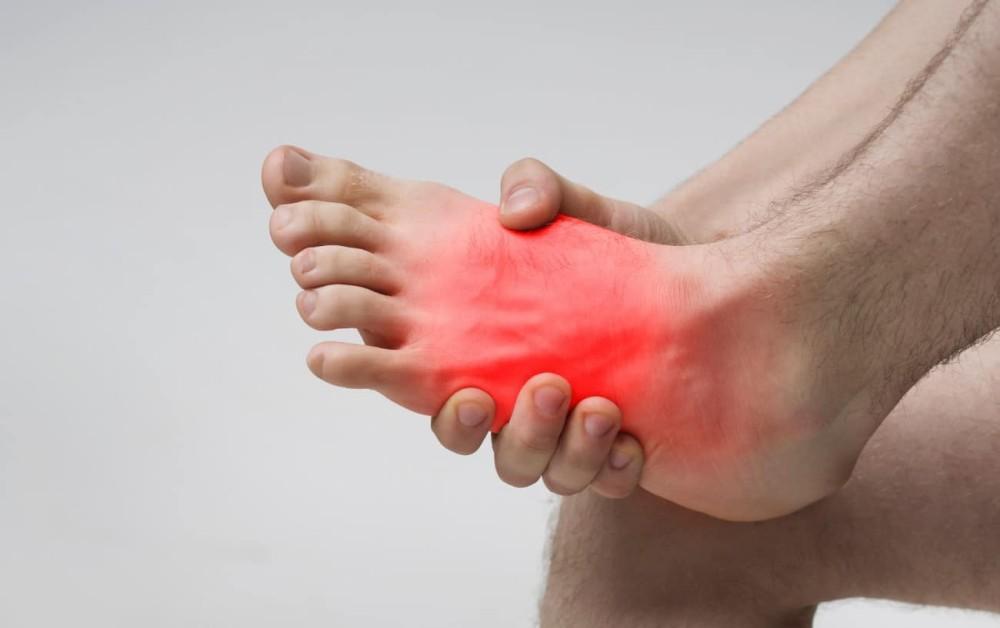
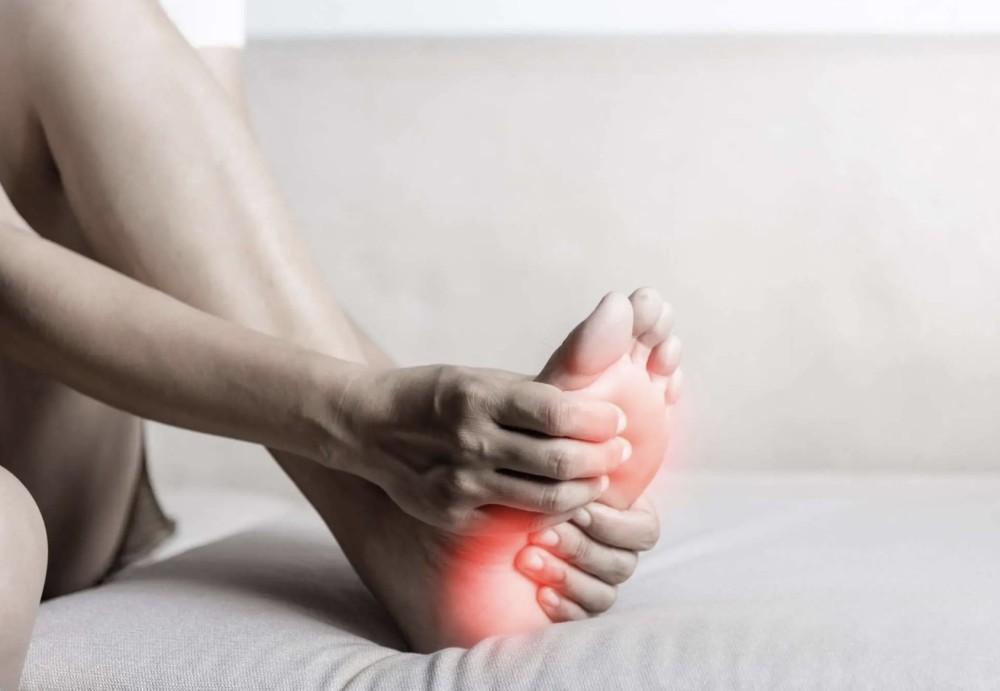
Foot pain can be difficult to describe.
One person says, “My heel hurts.”
Another says, “It feels like I’m stepping on a pebble.”
A runner points to one exact spot on the outside of the foot. A walker feels aching through the arch after an hour on their feet. Someone else develops pain across the top of the foot after changing shoes.
The location matters.
So does when the pain occurs.
Pain with the first steps in the morning means something different from pain that starts after mile five. Pain during push-off is different from pain with direct pressure from a shoe. Burning or tingling suggests something different from focal bone tenderness.
Our earlier guide, Foot Pain by Location: Heel, Arch, Ball of Foot, or Outside of Foot—What It Usually Means, focused on where the pain is.
This follow-up goes one step further:
What does that location mean when the pain happens specifically during walking or running?
For runners, walkers, athletes, and active adults in Princeton, Lawrenceville, West Windsor, Plainsboro, Hopewell, Pennington, Robbinsville, and throughout Mercer County, here is a practical location-by-location guide.
The location of foot pain can help narrow the diagnosis, but the activity pattern matters too.
First-step morning heel pain commonly suggests plantar fascia irritation.
Pain at the back of the heel is more likely to involve the Achilles tendon or nearby structures.
Burning, tingling, or a “pebble in the shoe” sensation in the forefoot raises suspicion for nerve irritation such as Morton’s neuroma.
Pain directly under the big toe may involve the sesamoids rather than ordinary metatarsalgia.
Focal pain over a bone that worsens with running and eventually walking raises concern for stress injury.
Outside-foot pain may involve peroneal tendons, joints, or the fifth metatarsal.
Top-of-foot pain can come from laces and extensor tendons, but focal worsening pain can also be a stress injury.
Changing shoes can help certain problems, but footwear alone does not solve every overuse injury.
Limping, swelling, focal bone pain, inability to bear weight, or pain that keeps worsening should be evaluated.
Each step places load through the foot.
Walking requires the foot to:
Accept body weight
Adapt to the ground
Stabilize the body
Roll forward
Push off through the toes
Running increases those demands.
The foot must repeatedly absorb and redirect force while muscles, tendons, bones, fascia, and joints work together.
Problems often appear when the workload changes faster than the tissue can adapt.
Common triggers include:
Increasing running mileage
Walking much more than usual
Vacation sightseeing
Beginning a new exercise program
Returning after injury
Adding hills
Adding speed work
Changing shoes
Changing to minimalist shoes
More barefoot walking
Hard court sports
Long standing shifts
Weight gain
Reduced strength after time off
Inadequate recovery
The question we often ask is simple:
What changed shortly before the foot started hurting?
Pain under the heel—particularly toward the inside—is commonly associated with plantar fasciitis.
Typical clues include:
Sharp pain with the first steps out of bed
Pain after getting up from a chair
Pain that improves as you loosen up
Aching after prolonged standing
Pain after longer walks or runs
Tenderness under the heel
The classic pattern is:
It hurts when I first get up, feels somewhat better once I start moving, and then aches again after I’ve been on it for a while.
That pattern differs from many bone stress injuries, which tend to become progressively worse with continued impact.
Learn more: Plantar Fasciitis
The plantar fascia and surrounding tissues are relatively unloaded while sleeping.
When you stand up and suddenly load the foot, the irritated tissue is exposed to tension again.
That produces the familiar first-step pain.
Importantly, plantar fasciitis is not simply something that needs to be “stretched out.”
Long-term treatment often involves:
Load management
Calf and foot strength
Appropriate mobility
Footwear
Gradual return to activity
Repeated aggressive stretching without addressing capacity may not solve the problem.
Pain behind the heel is more likely to involve the Achilles tendon.
Symptoms may include:
Morning stiffness
Pain during the first few minutes of walking
Pain running hills
Pain during faster running
Pain climbing stairs
Pain with calf raises
Tenderness in the tendon
Pain near the tendon’s attachment to the heel
Runners sometimes describe an Achilles problem as “heel pain” even though the pain is actually behind rather than under the heel.
That distinction changes treatment.
Not every heel pain is plantar fasciitis.
Deep or focal heel pain that becomes worse with impact may raise concern for:
Calcaneal stress injury
Heel fat-pad irritation
Other bone or joint problems
A stress injury becomes more concerning when pain:
Is very focal
Progressively worsens during activity
Begins affecting normal walking
Causes limping
Does not improve after warming up
PSFM’s Heel Pain page reviews several of these possibilities.
Pain through the arch can overlap with plantar fasciitis, but not every arch pain comes from the plantar fascia.
Possible causes include:
Plantar fascia overload
Foot muscle fatigue
Tendon irritation
Footwear changes
Sudden increase in walking
Running-load changes
A runner who recently increased mileage may notice aching through the arch late in the run.
A traveler may notice similar pain after walking 20,000 steps several days in a row.
That pattern often suggests load tolerance.
The foot is being asked to do more work than it was prepared for.
Pain along the inner side of the ankle and arch may involve the posterior tibial tendon.
That tendon helps support the arch during walking and running.
Symptoms may include:
Pain behind the inner ankle
Pain extending toward the arch
Difficulty with single-leg calf raises
Pain after prolonged walking
Symptoms that worsen with running
Persistent symptoms deserve evaluation, especially if there is progressive weakness or noticeable change in arch position.
The term metatarsalgia simply means pain in the ball of the foot.
It often develops from excessive pressure through the forefoot.
Symptoms may include:
Aching beneath the metatarsal heads
Burning discomfort
A bruised feeling
Pain during push-off
Pain in thin-soled shoes
Pain with running or jumping
Feeling like there is a pebble under the foot
Common contributors include:
Increased running volume
Court sports
High arches
Narrow shoes
Long periods on the feet
Toe deformities
Changes in forefoot loading
Learn more: Metatarsalgia
If ball-of-foot pain is associated with:
Burning
Tingling
Numbness
Pain traveling into the toes
A feeling of stepping on a pebble
Symptoms worse in narrow shoes
consider nerve irritation such as Morton’s neuroma.
Symptoms often improve when the patient removes the shoe or takes pressure off the forefoot.
That pattern is different from a metatarsal stress fracture.
A wider toe box, reducing forefoot compression, and properly positioned metatarsal pads may help some patients.
Learn more: Morton’s Neuroma
There are two small sesamoid bones beneath the big toe joint.
These little bones experience substantial force during push-off.
Pain may develop after:
Running
Sprinting
Dancing
Jumping
Court sports
Barefoot activity
Wearing thin-soled shoes
Increased hill or speed work
Sesamoid pain is usually felt directly under the big toe joint rather than broadly across the forefoot.
Symptoms may feel like:
A deep bruise
Sharp pressure
Pain during push-off
Pain going barefoot
Pain with flexible shoes
Learn more: Sesamoiditis
Persistent focal pain in this area deserves attention because sesamoid stress injuries can take longer to recover than simple soft-tissue irritation.
The big toe plays an enormous role in walking and running.
Every step requires push-off through the first metatarsophalangeal joint.
Several conditions may hurt there.
Turf toe is usually associated with an injury in which the big toe is bent upward forcefully.
Symptoms may include:
Sudden pain
Swelling
Bruising
Pain with push-off
Difficulty sprinting or cutting
Learn more: Turf Toe
A bunion may cause:
A visible bump
Shoe pressure
Redness
Pain with narrow footwear
Aching after walking
Learn more: Bunion
Hallux rigidus is arthritis and stiffness of the big toe joint.
Clues include:
Reduced toe motion
Pain pushing off
Pain going uphill
Pain during lunges
Joint stiffness
A bump on top of the joint
Learn more: Hallux Rigidus
Top-of-foot pain is another area where context matters.
A simple explanation may be shoe pressure.
For example:
New shoes
Tight laces
Swelling during a long run
High-volume feet in low-volume shoes
may place pressure over the top of the foot.
Extensor tendons can also become irritated.
But focal pain over a metatarsal that worsens with impact raises a different concern:
stress injury.
Do not keep loosening the laces for weeks if one exact spot on the bone is becoming increasingly painful.
Pain along the outer border of the foot has several possible causes.
These include:
Peroneal tendon irritation
Fifth metatarsal stress injury
Joint irritation
Residual problems after ankle sprain
Cuboid-region pain
Peroneal tendon symptoms often track behind the outside ankle and toward the outer foot.
They may worsen with:
Uneven ground
Hills
Side-to-side movement
Running
Previous ankle instability
Learn more: Peroneal Tendonitis
The fifth metatarsal is an important bone on the outside of the foot.
Some injuries in this area heal easily.
Others require more protection.
That means a runner with one very specific painful spot on the outside of the foot should not assume:
“It’s probably just a tendon.”
Focal bony pain, particularly if walking becomes painful, deserves evaluation.
Pain in the middle of the foot can result from:
Joint overload
Tendon problems
Stress injury
Arthritis
Midfoot sprain
Lisfranc injury
Midfoot pain after a twisting injury deserves particular attention.
Warning signs include:
Significant swelling
Bruising
Pain with push-off
Difficulty bearing weight
Bruising on the bottom of the foot
A traumatic midfoot injury should not automatically be treated as a mild foot sprain.
Foot stress fractures develop from repetitive bone overload rather than one dramatic injury.
They are particularly relevant to:
Runners
Dancers
Military trainees
Court-sport athletes
Athletes increasing training rapidly
Stress-fracture pain tends to become:
More focal
More predictable
Worse with impact
Worse as activity continues
Eventually, pain may occur during:
Walking
Stairs
Daily activity
Risk can increase with:
Rapid mileage changes
Low energy availability
Menstrual changes
Low bone density
Prior stress fracture
Vitamin D deficiency
Insufficient recovery
Learn more: Foot Stress Fracture
Sometimes.
Tendon and plantar fascia problems can improve temporarily once the tissue warms up.
That pattern is common.
But improvement after warming up does not automatically mean:
“It’s safe to ignore.”
If the pain:
Returns after every run
Gets worse afterward
Is worse the next morning
Begins earlier in each workout
Requires repeated medication to train
the tissue is still telling you that the current load exceeds its capacity.
It sounds strange, but this can happen.
Walking and running use the foot differently.
Walking involves longer ground-contact time and a different progression through the foot.
Certain joint, plantar fascia, or footwear-related problems may therefore feel worse during walking.
The opposite can also happen.
Impact-related stress injuries may tolerate ordinary walking initially but hurt quickly once running forces increase.
That difference can be diagnostically useful.
Sometimes.
Modified running may be reasonable when:
Pain is mild
Pain stays stable
There is no swelling
You are not limping
Your stride is unchanged
Pain settles afterward
You are back to baseline by the next day
Reduce running and consider evaluation when:
Pain begins earlier each run
Pain lingers into the next day
One precise area becomes increasingly tender
You change your stride
Pain repeatedly returns when mileage increases
Stop impact activity and get evaluated when:
Walking hurts
You are limping
There is significant swelling
Pain is sharply focal over bone
You cannot push off normally
There was a traumatic pop
You cannot bear weight
Shoes can absolutely influence foot symptoms.
Look at:
Toe-box width
Forefoot cushioning
Shoe stiffness
Heel-to-toe drop
Overall fit
Wear pattern
Whether symptoms started after changing models
But footwear is one variable—not the entire treatment.
If the tissue is overloaded, buying six pairs of shoes may simply produce six pairs of shoes and the same painful foot.
Neither universally.
Some healthy people tolerate barefoot activity extremely well.
But suddenly increasing barefoot time can increase load through:
Plantar fascia
Achilles
Calf
Metatarsals
Sesamoids
If barefoot walking aggravates an already painful foot, temporarily reduce it.
Gradual exposure matters.
Not every foot pain needs imaging.
X-rays may be useful when there is:
Trauma
Significant swelling
Joint pain
Focal bone tenderness
Persistent symptoms
Stress injuries create an important exception.
Early stress fractures may not appear clearly on X-ray.
MRI may be considered when:
Stress fracture is strongly suspected
Pain is worsening despite normal X-rays
A tendon or soft-tissue injury needs clarification
The diagnosis remains uncertain
Imaging should answer a question—not simply document that the foot hurts.
The progression depends on the diagnosis.
In general, we want:
Normal walking
No limp
Minimal swelling
Improving tenderness
Adequate strength
Comfortable push-off
Ability to tolerate basic single-leg loading
Then running may progress through:
Walking
Walk-jog intervals
Easy flat running
Longer easy running
Normal mileage
Hills
Speed work
Race- or sport-specific loading
Do not add mileage, hills, and speed simultaneously.
Runners and active adults throughout Princeton, Lawrenceville, West Windsor, Plainsboro, Hopewell, Pennington, Robbinsville, and Mercer County frequently come to PSFM asking:
Is this plantar fasciitis?
Could I have a stress fracture?
Why does the ball of my foot burn?
Why does the outside of my foot hurt?
Should I change shoes?
Can I keep running?
Do I need an MRI?
Why does pain disappear after warming up?
Should I wear inserts?
Is my running form contributing?
The location provides clues.
The pattern usually provides even more.
At Princeton Sports and Family Medicine, foot pain is evaluated by combining the location of symptoms with the patient’s walking, running, footwear, training load, injury history, and goals.
Sports Medicine Services can help distinguish plantar fascia problems, tendon pain, nerve irritation, joint injury, metatarsalgia, stress fracture, and other causes of foot pain.
Physical Therapy can address calf and foot strength, ankle mobility, single-leg control, gait, and progressive return to walking or running.
For runners with recurrent symptoms, the Run Stride & Performance Evaluation can provide a more detailed look at running mechanics, foot path, impact loading, strength, and movement.
Condition-specific PSFM resources include:
The goal is not simply to tell you where the foot hurts.
It is to understand why that location is overloaded and how to return to activity without repeating the same problem.
It depends on location. Heel pain may come from plantar fascia or Achilles problems; forefoot pain may involve metatarsalgia, nerve irritation, or sesamoids; focal worsening pain may represent bone stress.
Running places greater repetitive forces through the foot. Early stress injury, tendon overload, or other running-related conditions may hurt during running before they become symptomatic during walking.
Pain under the heel with the first steps in the morning is a classic pattern of plantar fasciitis. Achilles problems can also produce significant morning stiffness.
Burning, tingling, numbness, or a pebble-like sensation may suggest Morton’s neuroma or another nerve-related forefoot problem.
Pain directly beneath the big toe joint may come from sesamoiditis, sesamoid stress injury, turf toe, or other first-MTP-joint problems.
Possible causes include peroneal tendon problems, fifth-metatarsal stress injury, joint irritation, or problems related to a previous ankle sprain.
Top-of-foot pain deserves evaluation when it is focal, worsening with impact, associated with swelling, or begins affecting normal walking because stress injury may need to be ruled out.
Tendon pain often follows the course of a tendon and may improve somewhat as the tissue warms up. Stress fractures tend to produce increasingly focal bone pain that worsens with impact and may eventually hurt during walking.
Sometimes mild stable symptoms can be managed with temporary training modification. Stop and seek evaluation if pain causes limping, affects walking, becomes sharply focal, or worsens progressively.
Not usually at first. MRI becomes more useful when a stress fracture or soft-tissue injury is suspected and the diagnosis cannot be adequately clarified with examination and initial imaging.
It can help when shoe fit or pressure contributes, but persistent foot pain often also requires attention to training load, strength, mechanics, or the underlying diagnosis.
Princeton Sports and Family Medicine evaluates heel, arch, forefoot, big-toe, top-of-foot, and outside-foot pain in Lawrenceville for runners and active adults throughout Princeton and Mercer County.
The location of foot pain gives us a map.
But it does not provide the entire diagnosis.
Pain under the heel with the first steps of the morning suggests something different from burning between the toes, focal pain over a metatarsal, pain directly beneath the big toe, or aching behind the outside ankle.
Then ask the second question:
When does it hurt?
First steps?
Long walks?
Hills?
Push-off?
Mile five?
Only in one pair of shoes?
After activity?
Eventually during normal walking?
Those patterns help distinguish tissue overload from nerve irritation, joint problems, and bone stress injury.
Do not ignore a foot that is becoming progressively more painful.
And do not assume every running-related foot problem requires complete rest.
The right diagnosis allows us to modify the specific load that is irritating the foot, maintain safe activity where possible, rebuild strength and capacity, and return gradually.
If foot pain is changing how you walk or run, keeps returning with mileage, or has become focal enough that you are concerned about a stress injury, request an appointment with Princeton Sports and Family Medicine.
This article is for general educational purposes and does not replace individualized medical advice. Seek prompt medical evaluation for inability to bear weight, major swelling or bruising, deformity, a traumatic midfoot injury, a cold or discolored foot, progressive numbness or weakness, fever with a red or swollen foot, or rapidly worsening pain.